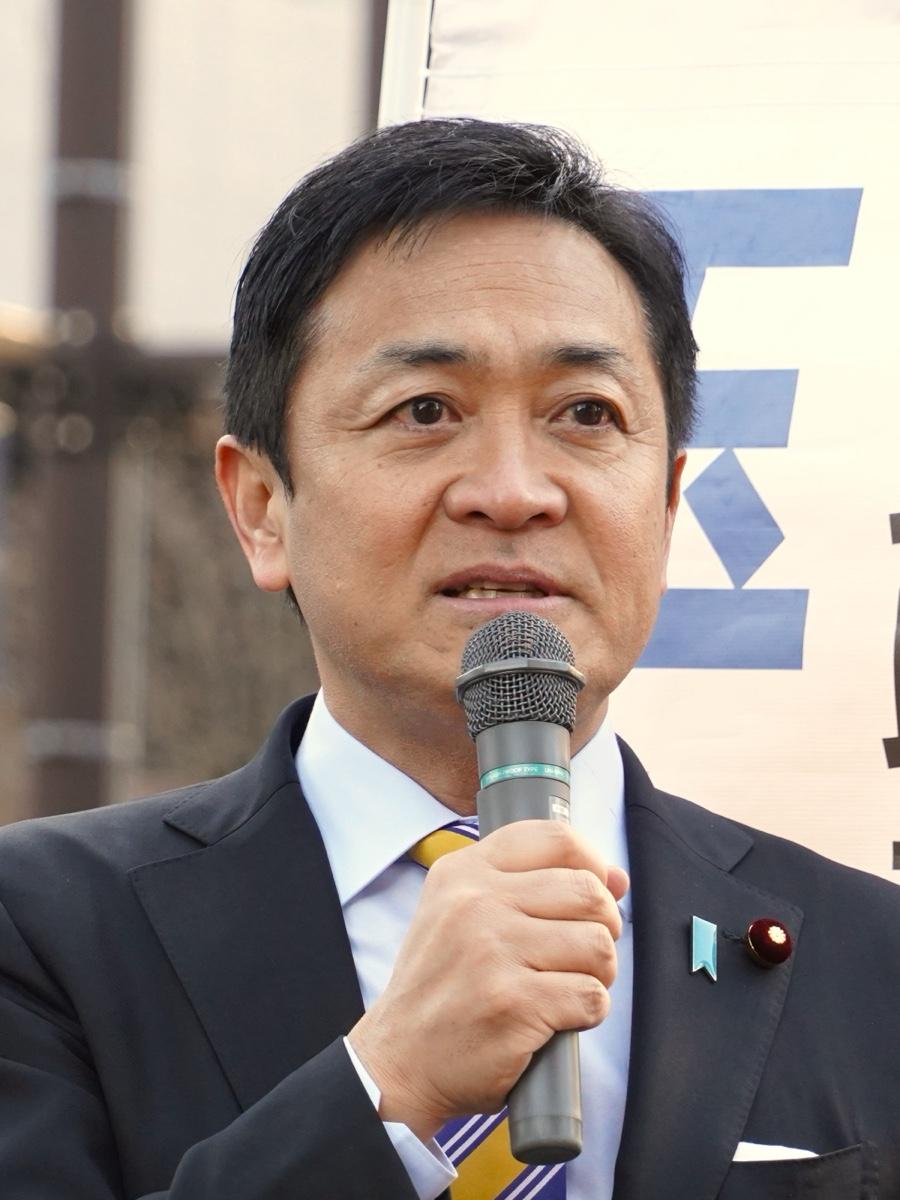
PoliticianPolitical leaning: Center-rightProfile last reviewed: 2026-07-29
Yuichiro Tamaki
Leader, Democratic Party for the People
Household-budget populism with a hawk's constitution: cut the taxes that eat your paycheck, restart the reactors, delete Article 9's second clause — and never quite sit down at the cabinet table.
Yuichiro Tamaki (玉木雄一郎) is the ex-Finance Ministry official who turned "increase your take-home pay" into the most effective slogan in Japanese politics, quadrupling his Democratic Party for the People from 7 to 28 seats in 2024 and then spending two years renting his votes to Prime Ministers Ishiba and Takaichi in exchange for tax cuts. In October 2025 the opposition briefly floated him as a unity candidate for prime minister — he said yes, the bid collapsed over nuclear power and the constitution, and by December he was signing a tax pact with Takaichi instead. Takaichi's 316-seat landslide in February 2026 left the DPP steady at 28 seats but stripped of the arithmetic that made him matter: an affordability populist in the Mamdani mould, now shouting at a supermajority from outside it.
Basis for the leaning assessment
Editorial estimate, deliberately modest, because Tamaki is one of the genuinely cross-cutting figures in Japanese politics and community votes may reasonably land elsewhere. Red-coded signals weighed: he wants Article 9's second clause deleted and an emergency clause added to the constitution, and in October 2025 he named the Constitutional Democratic Party's refusal to amend the constitution as a deal-breaker; he backs restarting AND newly building nuclear reactors; he opposes repealing the 2015 security legislation and supports higher defense spending; he is restrictive on the technical-intern foreign-worker scheme. Blue-coded signals weighed: his base is Rengo, the trade-union federation; his entire platform is anti-austerity redistribution to wage earners (tax-threshold hikes, scrapping the gasoline surcharge, cutting social-insurance premiums); he has criticised the LDP for tolerating anti-LGBT remarks by its own lawmakers. He calls himself a "liberal conservative," and the net effect is a soft red — a security and energy hawk running a left-populist economic campaign, which is why his voters skew young and non-aligned rather than conservative.
Current Stances
Stances are editorial interpretations, always shown with the statements and actions they rest on.
Cost of living is the whole platform: cut taxes and levies until take-home pay actually rises.
Tamaki has built the DPP around a single measurable promise — raise the income-tax and residential-tax thresholds, scrap the gasoline surcharge, cut social-insurance premiums — and he trades his votes in the Diet for instalments of it rather than for cabinet posts. He now campaigns on having broken a 30-year-old tax threshold and a 50-year-old fuel surcharge, and on going further in 2026.
Supporting statements & actions (2)
2025-12-18Action
Signed a written agreement with Prime Minister Sanae Takaichi to raise the tax-free income threshold to 1.78 million yen and, in exchange, to help pass the fiscal 2026 tax reform legislation and budget within the fiscal year. The measure raises the basic deduction for salaried workers earning up to 6.65 million yen, is worth roughly 4,000 to 36,000 yen a year per person, and is limited to two years.
The headline number matched the 1.78 million yen the DPP had demanded since 2022, but the delivered measure was temporary and income-capped rather than a permanent universal threshold; analysts described the pact as de facto external cooperation short of a coalition.
Because we increased our seats in the 2024 lower house election and the 2025 upper house election and a minority-government situation was created, the gasoline price cut that could not be done for 50 years and the raising of the "income wall" that could not be done for 30 years were achieved. Politics and policy have begun to move. Please do not stop this new political current. We will raise the residential tax deduction toward 1.78 million yen and push policies that will reliably increase take-home pay within this year. We are an opposition party that delivers policy. We will dig deeper into what we have steadily done, and increase take-home pay even more.
Goals
What Yuichiro Tamaki said they would do, in their own words and dated. Where the record settles one, the source for that is shown too. The same goals across everyone are in the promise tracker.
Short-term
Raise the residential-tax deduction to 1.78 million yen in 2026
Having won a two-year, income-capped hike in the income-tax threshold, he wants the same 1.78 million yen figure applied to the residential tax deduction — roughly a 600,000 yen increase worth about 60,000 yen a year to a taxpayer, at a claimed cost of a little over 3 trillion yen.
He keeps refusing to join the Takaichi coalition while making his party the government's indispensable policy partner in a chamber where the ruling bloc still lacks an upper-house majority. Whether that ends in a formal coalition, a standing external pact, or permanent opposition is undeclared.
Does each new statement or decision square with the record? Verdicts are not accusations: both sides of the record are presented so readers can judge for themselves. The same readings across everyone on the site are in the consistency index.
Signed a written agreement with Prime Minister Sanae Takaichi to raise the tax-free income threshold to 1.78 million yen and, in exchange, to help pass the fiscal 2026 tax reform legislation and budget within the fiscal year. The measure raises the basic deduction for salaried workers earning up to 6.65 million yen, is worth roughly 4,000 to 36,000 yen a year per person, and is limited to two years.
The headline number matched the 1.78 million yen the DPP had demanded since 2022, but the delivered measure was temporary and income-capped rather than a permanent universal threshold; analysts described the pact as de facto external cooperation short of a coalition.
When we cannot even run the Diet amicably, you would not normally go into a coalition. Even when I think I want to cooperate, one thing after another happens that pushes that away, so I am bewildered.
On a BS Fuji programme, ruling out joining the Takaichi coalition for now and citing the ruling parties' forcing through of the lower-house seat-reduction bill and the "second capital" bill; the ruling bloc holds 352 lower-house seats but still lacks an upper-house majority. Translated from the Japanese original.
Most-Cited Sources from Voterscommunity reading list
Articles readers attached to their poll votes as evidence. Only pages cited independently by two or more voters are listed.
The statements and actions that set social media on fire — top 2, in chronological order. Every entry links to its source.
1
2024-11-11Speech
The contents reported this morning are generally true. I would like to sincerely apologize to the many people across the country who had high hopes for me.
Hastily arranged news conference hours after the tabloid Flash published photos of Tamaki with a Takamatsu tourism ambassador, on the day parliament was to vote for prime minister and his 28 votes were pivotal; he did not resign, said he would ask his colleagues whether he should stay on, and was suspended by his own party for three months on December 4, 2024 while remaining leader. Translated from the Japanese original.
🔥The scandal broke at the exact hour Tamaki was Japan's kingmaker, and the collision of a policy triumph with a gravure-idol affair dominated Japanese broadcast and tabloid coverage for weeks; he became a meme as the leader who lost his halo and kept his job.
Answering reporters who asked whether the Constitutional Democratic Party had called for a unified opposition candidate for prime minister and whether his own name had been raised as that candidate, a week after the LDP-Komeito coalition collapsed. Translated from the Japanese original.
🔥For about a week Japanese and foreign media ran the scenario of a 28-seat party leader becoming prime minister; Bloomberg headlined him "Japan's surprise kingmaker" with a shot at the premiership before Ishin sided with Takaichi instead.
Timeline of Statements & Actions7 records, newest first
2026-07-02Interview
When we cannot even run the Diet amicably, you would not normally go into a coalition. Even when I think I want to cooperate, one thing after another happens that pushes that away, so I am bewildered.
On a BS Fuji programme, ruling out joining the Takaichi coalition for now and citing the ruling parties' forcing through of the lower-house seat-reduction bill and the "second capital" bill; the ruling bloc holds 352 lower-house seats but still lacks an upper-house majority. Translated from the Japanese original.
Because we increased our seats in the 2024 lower house election and the 2025 upper house election and a minority-government situation was created, the gasoline price cut that could not be done for 50 years and the raising of the "income wall" that could not be done for 30 years were achieved. Politics and policy have begun to move. Please do not stop this new political current. We will raise the residential tax deduction toward 1.78 million yen and push policies that will reliably increase take-home pay within this year. We are an opposition party that delivers policy. We will dig deeper into what we have steadily done, and increase take-home pay even more.
His opening campaign speech at JR Shimbashi Station on the first official day of the February 8, 2026 general election, in which the DPP finished with 28 seats while the LDP won 316. Translated from the Japanese original.
Signed a written agreement with Prime Minister Sanae Takaichi to raise the tax-free income threshold to 1.78 million yen and, in exchange, to help pass the fiscal 2026 tax reform legislation and budget within the fiscal year. The measure raises the basic deduction for salaried workers earning up to 6.65 million yen, is worth roughly 4,000 to 36,000 yen a year per person, and is limited to two years.
His opening campaign speech at JR Shimbashi Station on the first official day of the February 8, 2026 general election, in which the DPP finished with 28 seats while the LDP won 316. Translated from the Japanese original.
Amend the constitution — add an emergency clause and delete Article 9's second clause.
Unlike the rest of the opposition, Tamaki treats constitutional revision as non-negotiable: he wants an emergency clause rather than reliance on an emergency session of the upper house, and he wants Article 9's second clause deleted so the limits on the Self-Defense Forces are written down explicitly. In October 2025 he cited the Constitutional Democratic Party's refusal to revise the constitution as one of the reasons he could not lead an anti-LDP government.
Supporting statements & actions (2)
2025-10-15Interview
On nuclear power, their answer was that they would not permit new construction or expansion, and that they would not review the "zero nuclear power" written into their platform. On emergencies, their answer was that these would be handled by an emergency session of the House of Councillors and that they could not agree to constitutional revision — so here too I felt there is a gap.
Explaining, at the same news conference, why he could not build a government with the Constitutional Democratic Party; he named three gaps — the 2015 security legislation, nuclear new-build, and constitutional revision. Translated and lightly condensed from two consecutive remarks in the same Japanese news conference.
Answering reporters who asked whether the Constitutional Democratic Party had called for a unified opposition candidate for prime minister and whether his own name had been raised as that candidate, a week after the LDP-Komeito coalition collapsed. Translated from the Japanese original.
🔥For about a week Japanese and foreign media ran the scenario of a 28-seat party leader becoming prime minister; Bloomberg headlined him "Japan's surprise kingmaker" with a shot at the premiership before Ishin sided with Takaichi instead.
Restart the reactors and build new ones — energy security is not renewables versus nuclear.
Tamaki has pushed nuclear restarts and new construction since at least his November 2024 energy proposal to Prime Minister Ishiba, framing it as domestic energy security and household electricity bills rather than as a climate argument. He treated the Constitutional Democratic Party's "zero nuclear" platform plank as a disqualifying condition for any joint government.
Supporting statements & actions (2)
2024-11-27Action
Presented the Democratic Party for the People's energy policy proposal to Prime Minister Shigeru Ishiba, calling for restarting existing nuclear reactors and building new ones, and arguing that energy security should not be framed as a choice between renewables and nuclear power.
Tamaki used the leverage of his party's post-election seat gains to hand the prime minister an energy platform that is closer to the LDP's than to the rest of the opposition's. Written as a factual event description because the exact wording of his remarks could not be independently confirmed.
On nuclear power, their answer was that they would not permit new construction or expansion, and that they would not review the "zero nuclear power" written into their platform. On emergencies, their answer was that these would be handled by an emergency session of the House of Councillors and that they could not agree to constitutional revision — so here too I felt there is a gap.
Explaining, at the same news conference, why he could not build a government with the Constitutional Democratic Party; he named three gaps — the 2015 security legislation, nuclear new-build, and constitutional revision. Translated and lightly condensed from two consecutive remarks in the same Japanese news conference.
He confirmed in October 2025 that he would accept nomination as the opposition's unified candidate for prime minister, and has never withdrawn the ambition; with 28 seats out of 465 he has no arithmetic path of his own, so it remains an undeclared long game.
In December 2025 Tamaki signed his name to a document promising Takaichi that his party would help pass the fiscal 2026 tax bills and budget in return for the 1.78 million yen threshold; by mid-2026 he was on television saying a coalition is not something you would "normally" enter, and Japanese reporting says he signalled support for the budget and then voted against it, leaving Takaichi distrustful. His framing is that the ruling parties broke faith first — once they had a 352-seat lower-house bloc they rammed through the seat-reduction and second-capital bills, and he says he is "bewildered" by being pushed away when he wanted to cooperate. Critics read it the other way: he banked the tax cut, kept the credit, then withheld the votes he had promised, which is exactly the behaviour of a leader who wants influence without responsibility. Both readings are consistent with the same underlying strategy — cash the policy, refuse the cabinet seat.
Signed a written agreement with Prime Minister Sanae Takaichi to raise the tax-free income threshold to 1.78 million yen and, in exchange, to help pass the fiscal 2026 tax reform legislation and budget within the fiscal year. The measure raises the basic deduction for salaried workers earning up to 6.65 million yen, is worth roughly 4,000 to 36,000 yen a year per person, and is limited to two years.
The headline number matched the 1.78 million yen the DPP had demanded since 2022, but the delivered measure was temporary and income-capped rather than a permanent universal threshold; analysts described the pact as de facto external cooperation short of a coalition.
Because we increased our seats in the 2024 lower house election and the 2025 upper house election and a minority-government situation was created, the gasoline price cut that could not be done for 50 years and the raising of the "income wall" that could not be done for 30 years were achieved. Politics and policy have begun to move. Please do not stop this new political current. We will raise the residential tax deduction toward 1.78 million yen and push policies that will reliably increase take-home pay within this year. We are an opposition party that delivers policy. We will dig deeper into what we have steadily done, and increase take-home pay even more.
His opening campaign speech at JR Shimbashi Station on the first official day of the February 8, 2026 general election, in which the DPP finished with 28 seats while the LDP won 316. Translated from the Japanese original.
Tamaki campaigned in January 2026 on having achieved "the raising of the income wall that could not be done for 30 years," the promise that took his party from 7 to 28 seats. What he actually signed five weeks earlier was a two-year measure, capped at salaried workers earning up to 6.65 million yen, worth between roughly 4,000 and 36,000 yen a year. He argues that the headline figure is his — 1.78 million yen, not the LDP's opening 1.23 million or its 1.6 million compromise — and that the point was to break a three-decade freeze and keep going. Opponents point out that the wall voters were promised was a permanent, universal threshold, and that a temporary means-tested deduction worth a few thousand yen a month is closer to a rebate than to the structural change he sold.
The contents reported this morning are generally true. I would like to sincerely apologize to the many people across the country who had high hopes for me.
Hastily arranged news conference hours after the tabloid Flash published photos of Tamaki with a Takamatsu tourism ambassador, on the day parliament was to vote for prime minister and his 28 votes were pivotal; he did not resign, said he would ask his colleagues whether he should stay on, and was suspended by his own party for three months on December 4, 2024 while remaining leader. Translated from the Japanese original.
🔥The scandal broke at the exact hour Tamaki was Japan's kingmaker, and the collision of a policy triumph with a gravure-idol affair dominated Japanese broadcast and tabloid coverage for weeks; he became a meme as the leader who lost his halo and kept his job.
Answering reporters who asked whether the Constitutional Democratic Party had called for a unified opposition candidate for prime minister and whether his own name had been raised as that candidate, a week after the LDP-Komeito coalition collapsed. Translated from the Japanese original.
🔥For about a week Japanese and foreign media ran the scenario of a 28-seat party leader becoming prime minister; Bloomberg headlined him "Japan's surprise kingmaker" with a shot at the premiership before Ishin sided with Takaichi instead.
In November 2024 Tamaki apologised for an affair, declined to resign, said he would ask his colleagues whether he should stay, and accepted a three-month suspension of his own party membership while keeping the leadership. Eleven months later the largest opposition party was proposing him as its candidate for prime minister and he said yes. He casts this as vindication of his choice to repay the public "with my work," and his party plainly agreed. Critics note that a scandal which would have ended a Japanese party leader a decade ago cost him a three-month suspension and no leverage at all — evidence less of atonement than of how indispensable his 28 seats had become.
The headline number matched the 1.78 million yen the DPP had demanded since 2022, but the delivered measure was temporary and income-capped rather than a permanent universal threshold; analysts described the pact as de facto external cooperation short of a coalition.
On nuclear power, their answer was that they would not permit new construction or expansion, and that they would not review the "zero nuclear power" written into their platform. On emergencies, their answer was that these would be handled by an emergency session of the House of Councillors and that they could not agree to constitutional revision — so here too I felt there is a gap.
Explaining, at the same news conference, why he could not build a government with the Constitutional Democratic Party; he named three gaps — the 2015 security legislation, nuclear new-build, and constitutional revision. Translated and lightly condensed from two consecutive remarks in the same Japanese news conference.
Answering reporters who asked whether the Constitutional Democratic Party had called for a unified opposition candidate for prime minister and whether his own name had been raised as that candidate, a week after the LDP-Komeito coalition collapsed. Translated from the Japanese original.
🔥For about a week Japanese and foreign media ran the scenario of a 28-seat party leader becoming prime minister; Bloomberg headlined him "Japan's surprise kingmaker" with a shot at the premiership before Ishin sided with Takaichi instead.
Presented the Democratic Party for the People's energy policy proposal to Prime Minister Shigeru Ishiba, calling for restarting existing nuclear reactors and building new ones, and arguing that energy security should not be framed as a choice between renewables and nuclear power.
Tamaki used the leverage of his party's post-election seat gains to hand the prime minister an energy platform that is closer to the LDP's than to the rest of the opposition's. Written as a factual event description because the exact wording of his remarks could not be independently confirmed.
The contents reported this morning are generally true. I would like to sincerely apologize to the many people across the country who had high hopes for me.
Hastily arranged news conference hours after the tabloid Flash published photos of Tamaki with a Takamatsu tourism ambassador, on the day parliament was to vote for prime minister and his 28 votes were pivotal; he did not resign, said he would ask his colleagues whether he should stay on, and was suspended by his own party for three months on December 4, 2024 while remaining leader. Translated from the Japanese original.
🔥The scandal broke at the exact hour Tamaki was Japan's kingmaker, and the collision of a policy triumph with a gravure-idol affair dominated Japanese broadcast and tabloid coverage for weeks; he became a meme as the leader who lost his halo and kept his job.