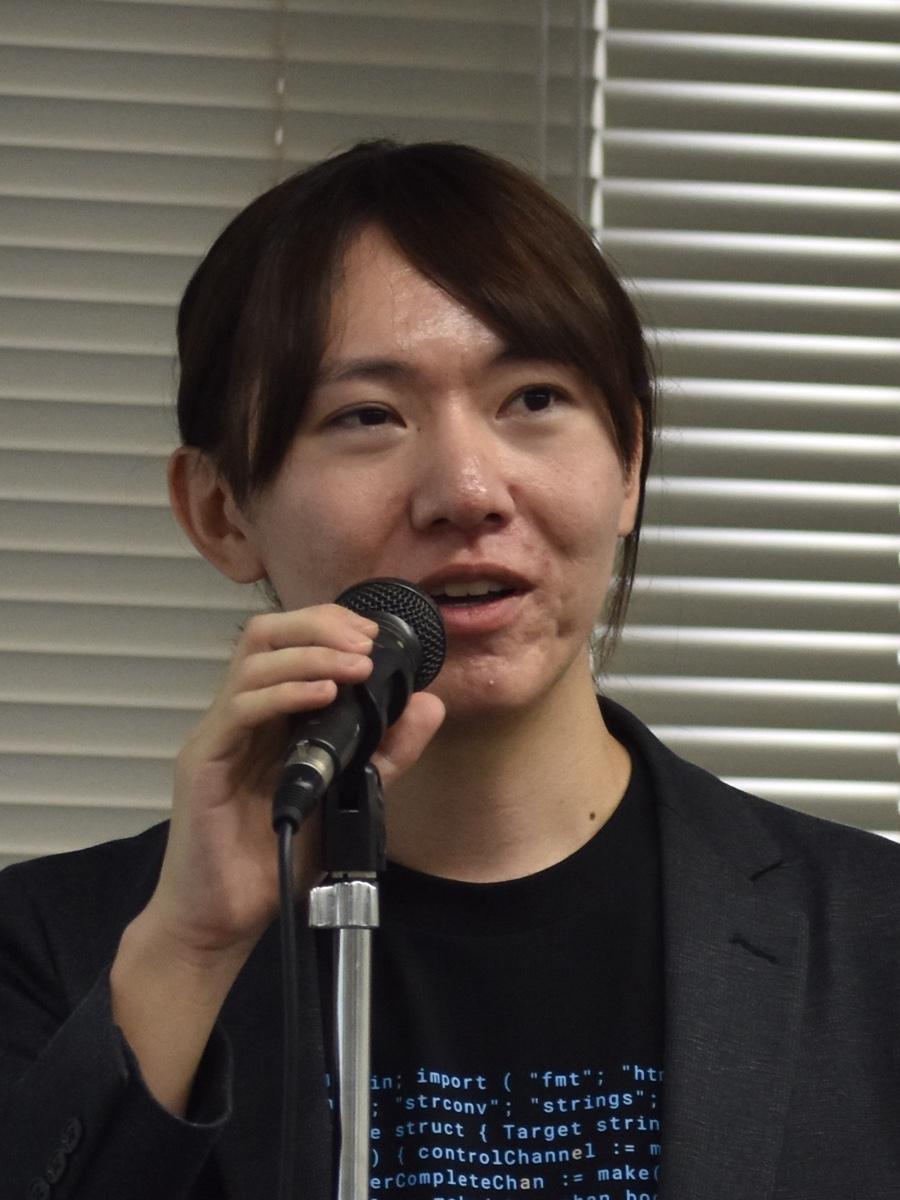
PoliticianPolitical leaning: CentristProfile last reviewed: 2026-07-29
Takahiro Anno
Leader, Team Mirai
Democracy as an open-source repo and AI as an industrial revolution already under way: take pull requests from strangers, then build a state that can actually read the model.
Takahiro Anno (安野貴博) went from fifth place in the 2024 Tokyo governor's race — running a 24-hour AI avatar of himself and a manifesto that accepted pull requests from strangers — to a House of Councillors seat in July 2025 and, on 8 February 2026, a party of 11 lower-house members that took 3,813,749 proportional votes (6.66%) and beat every projection made for it. Since then he has been Nagatacho's AI tutor: announcing hands-on AI training for lawmakers of any party, co-chairing a seven-party Diet study group on AI and democracy, and pressing the government to give Japan's AI Safety Institute the in-house technical muscle to evaluate frontier models rather than take vendors' word for it. Where David Sacks treats safety talk as a doomer racket and Dario Amodei treats it as an existential brief, Anno holds a third position that barely exists in Washington — accelerate hard, and build the state capacity to inspect what you are accelerating.
Basis for the leaning assessment
Editorial estimate of 0, and deliberately so: Anno's platform runs orthogonal to Japan's red/blue axis, and the signals that do exist offset each other. Red-coded: he backs revising Article 9 so the constitution is 'brought into line with reality' (anno-2026-article9); he argues for defence-adjacent state capacity, including extending Japan's security clearance regime to AI Safety Institute staff and hosting high-capability models inside government for security testing (anno-2026-ai-safety-institute); and he refused the consumption-tax cut that both the left and the populist right campaigned on in February 2026, arguing for growth investment instead. Blue-coded: tax cuts scaled by number of children, social-insurance premium relief because 'bold vision means nothing if people are struggling right now' (anno-2026-three-pillars), a social-security design he has said should scale up toward basic income if AI-driven inequality widens, and abolition of corporate political donations. Candidate-survey answers compiled on his Japanese Wikipedia entry — which I could not independently verify against a primary source in this session — additionally put him in favour of selective separate surnames and same-sex marriage while also favouring greater reliance on nuclear power, i.e. blue on social questions and red on energy. English-language coverage and Team Mirai's own positioning describe the party as centrist: centre-right on fiscal policy, centre-left on social policy, and primarily organised around an institutional axis (open versus closed government) that the red/blue frame does not measure. If forced off zero, the Article 9 and nuclear signals would nudge him a few points red; the honest answer is that community votes and the AI assessment should decide, and 0 should be read as 'cross-cutting technocrat', not 'centrist by evasion'.
Current Stances
Stances are editorial interpretations, always shown with the statements and actions they rest on.
Guardrails through state capability, not prohibition — the government should be able to test the model itself.
Anno's regulatory answer is institutional muscle rather than bans: an AI Safety Institute with in-house technical capacity to evaluate individual frontier models, security clearances for the officials who handle pre-release information so foreign developers will actually share it, and government-hosted high-capability models for security work. He pairs that with the insistence that ministers use the tools personally to feel the risks, rather than legislating about a technology they have never touched.
Supporting statements & actions (2)
2026-05-19Speech
It is extremely important that Japan's AI Safety Institute itself possess the technical capability to evaluate individual models.
Questioning ministers in the House of Councillors Committee on Internal Affairs and Communications, Anno argued that frontier AI developers grant pre-release access only to governments with credible evaluation capacity — citing the UK's AI Safety Institute — said 'institutional guarantees of trust are needed', and proposed extending Japan's security clearance system to institute staff handling frontier model information. Translated from the Japanese original.
What Takahiro Anno said they would do, in their own words and dated. Where the record settles one, the source for that is shown too. The same goals across everyone are in the promise tracker.
Short-term
Give Japan a state that can inspect frontier AI itself
Equip Japan's AI Safety Institute with the technical capability to evaluate individual frontier models, extend the security clearance regime to its staff so foreign developers will grant pre-release access, and host high-capability models domestically for government security testing.
Scale broad listening and version-controlled, participatory policymaking from one campaign into standard practice — AI mediating between citizens and the state at volumes the Diet cannot handle unaided, with legislation rendered into plain language and political money made visible by default.
Does each new statement or decision square with the record? Verdicts are not accusations: both sides of the record are presented so readers can judge for themselves. The same readings across everyone on the site are in the consistency index.
Using GitHub, a tool commonly used in open-source development, we will make it possible for anyone to propose requests on our policies. (The final decision on whether or not each opinion is reflected is made by me myself, as the person responsible.)
Announcing the 'participatory manifesto' for his independent run in the 2024 Tokyo gubernatorial election, in which he argued that any single person's viewpoint is inherently limited and pledged to open-source the campaign's digital infrastructure afterwards. Translated from the Japanese original.
🔥The policy repository drew hundreds of issues and pull requests from members of the public and became the most-discussed feature of a campaign that mainstream Japanese media otherwise barely covered; it was dissected in engineering write-ups on Qiita and logmi and is still the reference point for 'open-source politics' in Japan.
The statements and actions that set social media on fire — top 1, in chronological order. Every entry links to its source.
1
2024-06-20Publication
Using GitHub, a tool commonly used in open-source development, we will make it possible for anyone to propose requests on our policies. (The final decision on whether or not each opinion is reflected is made by me myself, as the person responsible.)
Announcing the 'participatory manifesto' for his independent run in the 2024 Tokyo gubernatorial election, in which he argued that any single person's viewpoint is inherently limited and pledged to open-source the campaign's digital infrastructure afterwards. Translated from the Japanese original.
🔥The policy repository drew hundreds of issues and pull requests from members of the public and became the most-discussed feature of a campaign that mainstream Japanese media otherwise barely covered; it was dissected in engineering write-ups on Qiita and logmi and is still the reference point for 'open-source politics' in Japan.
Timeline of Statements & Actions7 records, newest first
2026-07-07Speech
I think we need to build a firm consensus across party lines and proceed on that basis.
Seven ruling and opposition parties finalised a set of 'Recommendations for Strengthening Legislative Functions' at a bipartisan study group on AI, digital technology and the Diet that Anno co-chairs with LDP lawmaker Masaaki Taira and that was established in October 2025. Translated from the Japanese original.
The impact AI has on society could rival the Industrial Revolution, and it would not be strange if it were larger. How much we can make AI work, and work, and work some more — that is what will largely determine Japan's future. Politicians must never underestimate AI's impact.
Debating Prime Minister Sanae Takaichi in the Diet's joint session of the Committees on Fundamental National Policies, Anno pressed the government on AI strategy, insisted that ministers use the tools themselves to feel the risks first-hand, and offered to tutor the prime minister personally. Translated from the Japanese original.
The impact AI has on society could rival the Industrial Revolution, and it would not be strange if it were larger. How much we can make AI work, and work, and work some more — that is what will largely determine Japan's future. Politicians must never underestimate AI's impact.
Debating Prime Minister Sanae Takaichi in the Diet's joint session of the Committees on Fundamental National Policies, Anno pressed the government on AI strategy, insisted that ministers use the tools themselves to feel the risks first-hand, and offered to tutor the prime minister personally. Translated from the Japanese original.
Government should be rebuilt as open-source software with citizens permanently in the loop.
From the 2024 GitHub manifesto that accepted public pull requests to the AI avatar that answered voters live and the cross-party Diet study group he now co-chairs, Anno's consistent claim is that legislatures cannot process modern volumes of public input unaided and that AI mediation is the fix. Critics note the same tools concentrate agenda-setting power in whoever runs the models — a charge already levelled at Team Mirai's AI fact-checker.
Supporting statements & actions (3)
2024-06-20Publication
Using GitHub, a tool commonly used in open-source development, we will make it possible for anyone to propose requests on our policies. (The final decision on whether or not each opinion is reflected is made by me myself, as the person responsible.)
Announcing the 'participatory manifesto' for his independent run in the 2024 Tokyo gubernatorial election, in which he argued that any single person's viewpoint is inherently limited and pledged to open-source the campaign's digital infrastructure afterwards. Translated from the Japanese original.
🔥The policy repository drew hundreds of issues and pull requests from members of the public and became the most-discussed feature of a campaign that mainstream Japanese media otherwise barely covered; it was dissected in engineering write-ups on Qiita and logmi and is still the reference point for 'open-source politics' in Japan.
As the speed of global change keeps rising, the processing capacity of Nagatacho hasn't increased that much.
In an English-language interview after Team Mirai's 11-seat breakthrough, Anno laid out three pillars — bold investment in AI, autonomous vehicles, robotics and research; protecting people's livelihoods today because 'bold vision means nothing if people are struggling right now'; and upgrading politics and public administration through technology.
I think we need to build a firm consensus across party lines and proceed on that basis.
Seven ruling and opposition parties finalised a set of 'Recommendations for Strengthening Legislative Functions' at a bipartisan study group on AI, digital technology and the Diet that Anno co-chairs with LDP lawmaker Masaaki Taira and that was established in October 2025. Translated from the Japanese original.
We are in the earliest innings of an industrial-revolution-scale shift, and Japan's job is to ride it hard.
Anno tells the Diet that AI's societal impact could match or exceed the Industrial Revolution and that Japan's future turns on how relentlessly it puts AI to work, coupling that with heavy public investment in AI, robotics, autonomous vehicles and research. It is an accelerationist thesis argued from inside a legislature rather than from a lab.
Supporting statements & actions (2)
2026-03-13Interview
As the speed of global change keeps rising, the processing capacity of Nagatacho hasn't increased that much.
In an English-language interview after Team Mirai's 11-seat breakthrough, Anno laid out three pillars — bold investment in AI, autonomous vehicles, robotics and research; protecting people's livelihoods today because 'bold vision means nothing if people are struggling right now'; and upgrading politics and public administration through technology.
The impact AI has on society could rival the Industrial Revolution, and it would not be strange if it were larger. How much we can make AI work, and work, and work some more — that is what will largely determine Japan's future. Politicians must never underestimate AI's impact.
Debating Prime Minister Sanae Takaichi in the Diet's joint session of the Committees on Fundamental National Policies, Anno pressed the government on AI strategy, insisted that ministers use the tools themselves to feel the risks first-hand, and offered to tutor the prime minister personally. Translated from the Japanese original.
In nine months Team Mirai went from a one-man party to 11 lower-house seats plus Anno's own upper-house seat, absorbing unaffiliated voters and finishing just behind Sanseito on the proportional vote. Anno has declared no run at national leadership, but he now leads a party larger than several established rivals and treats cross-party AI policy as the lever for growing it.
On the stock holdings, the figures appearing in the reports differ from my own understanding by two orders of magnitude, so I want to check immediately and, if necessary, promptly submit correction documents.
The Upper House published the statutory asset disclosures of 125 members on 5 January 2026, listing Anno at roughly 361 million yen as of July 2025 plus holdings in Amazon, Microsoft, Alphabet and Nvidia; after an influencer argued the share figures implied billions more, Anno posted this response on X. Translated from the Japanese original.
The politician who put his manifesto on GitHub so that strangers could file pull requests, and whose party ships a tool that renders political money as a Sankey diagram, had to publicly correct his own legally mandated asset filing by two orders of magnitude. Anno's framing is that he misread a row in the form, said so within a day on X, and filed the correction — radical transparency includes being visibly wrong in public, and no hidden money was ever alleged. Critics answer that a party whose entire pitch is that technology makes politics legible cannot fumble the one disclosure the law already forces on it, and that the ~361 million yen on the form sits awkwardly with the 2025 campaign's emphasis on his personal 20-million-yen sacrifice. Both readings survive the evidence: the error was self-corrected and unforced, and it landed precisely on the axis he asked voters to judge him on.
It is extremely important that Japan's AI Safety Institute itself possess the technical capability to evaluate individual models.
Questioning ministers in the House of Councillors Committee on Internal Affairs and Communications, Anno argued that frontier AI developers grant pre-release access only to governments with credible evaluation capacity — citing the UK's AI Safety Institute — said 'institutional guarantees of trust are needed', and proposed extending Japan's security clearance system to institute staff handling frontier model information. Translated from the Japanese original.
The impact AI has on society could rival the Industrial Revolution, and it would not be strange if it were larger. How much we can make AI work, and work, and work some more — that is what will largely determine Japan's future. Politicians must never underestimate AI's impact.
Debating Prime Minister Sanae Takaichi in the Diet's joint session of the Committees on Fundamental National Policies, Anno pressed the government on AI strategy, insisted that ministers use the tools themselves to feel the risks first-hand, and offered to tutor the prime minister personally. Translated from the Japanese original.
One day he tells the government its AI Safety Institute must be technically capable of evaluating frontier models and that its staff need security clearances; the next he tells the prime minister that Japan's future depends on making AI 'work, and work, and work some more'. Anno's own framing is that these are the same argument — you cannot deploy a technology this consequential without the state being able to measure it, so evaluation capacity is an accelerant, not a brake. Sceptics on the safety side note he asks for no binding limits, only better instruments, while deregulationists note that clearances and state evaluation are exactly the machinery that later becomes licensing. On the record so far the two positions genuinely cohere, and the friction is between how each camp expects them to end up rather than in anything he has actually said.
Using GitHub, a tool commonly used in open-source development, we will make it possible for anyone to propose requests on our policies. (The final decision on whether or not each opinion is reflected is made by me myself, as the person responsible.)
Announcing the 'participatory manifesto' for his independent run in the 2024 Tokyo gubernatorial election, in which he argued that any single person's viewpoint is inherently limited and pledged to open-source the campaign's digital infrastructure afterwards. Translated from the Japanese original.
🔥The policy repository drew hundreds of issues and pull requests from members of the public and became the most-discussed feature of a campaign that mainstream Japanese media otherwise barely covered; it was dissected in engineering write-ups on Qiita and logmi and is still the reference point for 'open-source politics' in Japan.
I think we need to build a firm consensus across party lines and proceed on that basis.
Seven ruling and opposition parties finalised a set of 'Recommendations for Strengthening Legislative Functions' at a bipartisan study group on AI, digital technology and the Diet that Anno co-chairs with LDP lawmaker Masaaki Taira and that was established in October 2025. Translated from the Japanese original.
In 2024 the method was a public repository anyone could contribute to, with Anno explicitly reserving the final call as 'the person responsible'; in 2026 it is a seven-party study group co-chaired with an LDP veteran, producing consensus recommendations on how the Diet should work. He frames this as the plan succeeding — the point of the GitHub campaign was always to get participatory machinery inside institutions, and consensus is how anything actually passes in Japan. Critics see the familiar arc of a reform outsider: the open-door promise becomes committee work and horse-trading with the ruling party, and the decision rights he kept for himself in 2024 now sit inside a whipped party of twelve. The evidence supports evolution rather than betrayal — the openness has become procedural, but it has also become binding on people other than him.
Questioning ministers in the House of Councillors Committee on Internal Affairs and Communications, Anno argued that frontier AI developers grant pre-release access only to governments with credible evaluation capacity — citing the UK's AI Safety Institute — said 'institutional guarantees of trust are needed', and proposed extending Japan's security clearance system to institute staff handling frontier model information. Translated from the Japanese original.
As the speed of global change keeps rising, the processing capacity of Nagatacho hasn't increased that much.
In an English-language interview after Team Mirai's 11-seat breakthrough, Anno laid out three pillars — bold investment in AI, autonomous vehicles, robotics and research; protecting people's livelihoods today because 'bold vision means nothing if people are struggling right now'; and upgrading politics and public administration through technology.
It should be brought into line with reality. The discrepancy between reality and the constitution is harming the state of affairs in which the constitution is respected. A certain degree of review is necessary.
Asked about revising Article 9 the day after the general election, Anno cited the gap between the constitution's renunciation of war potential and the existence of the Self-Defense Forces, while saying Team Mirai is not yet at the stage of proposing specific amendment language. Translated from the Japanese original.
On the stock holdings, the figures appearing in the reports differ from my own understanding by two orders of magnitude, so I want to check immediately and, if necessary, promptly submit correction documents.
The Upper House published the statutory asset disclosures of 125 members on 5 January 2026, listing Anno at roughly 361 million yen as of July 2025 plus holdings in Amazon, Microsoft, Alphabet and Nvidia; after an influencer argued the share figures implied billions more, Anno posted this response on X. Translated from the Japanese original.
Using GitHub, a tool commonly used in open-source development, we will make it possible for anyone to propose requests on our policies. (The final decision on whether or not each opinion is reflected is made by me myself, as the person responsible.)
Announcing the 'participatory manifesto' for his independent run in the 2024 Tokyo gubernatorial election, in which he argued that any single person's viewpoint is inherently limited and pledged to open-source the campaign's digital infrastructure afterwards. Translated from the Japanese original.
🔥The policy repository drew hundreds of issues and pull requests from members of the public and became the most-discussed feature of a campaign that mainstream Japanese media otherwise barely covered; it was dissected in engineering write-ups on Qiita and logmi and is still the reference point for 'open-source politics' in Japan.