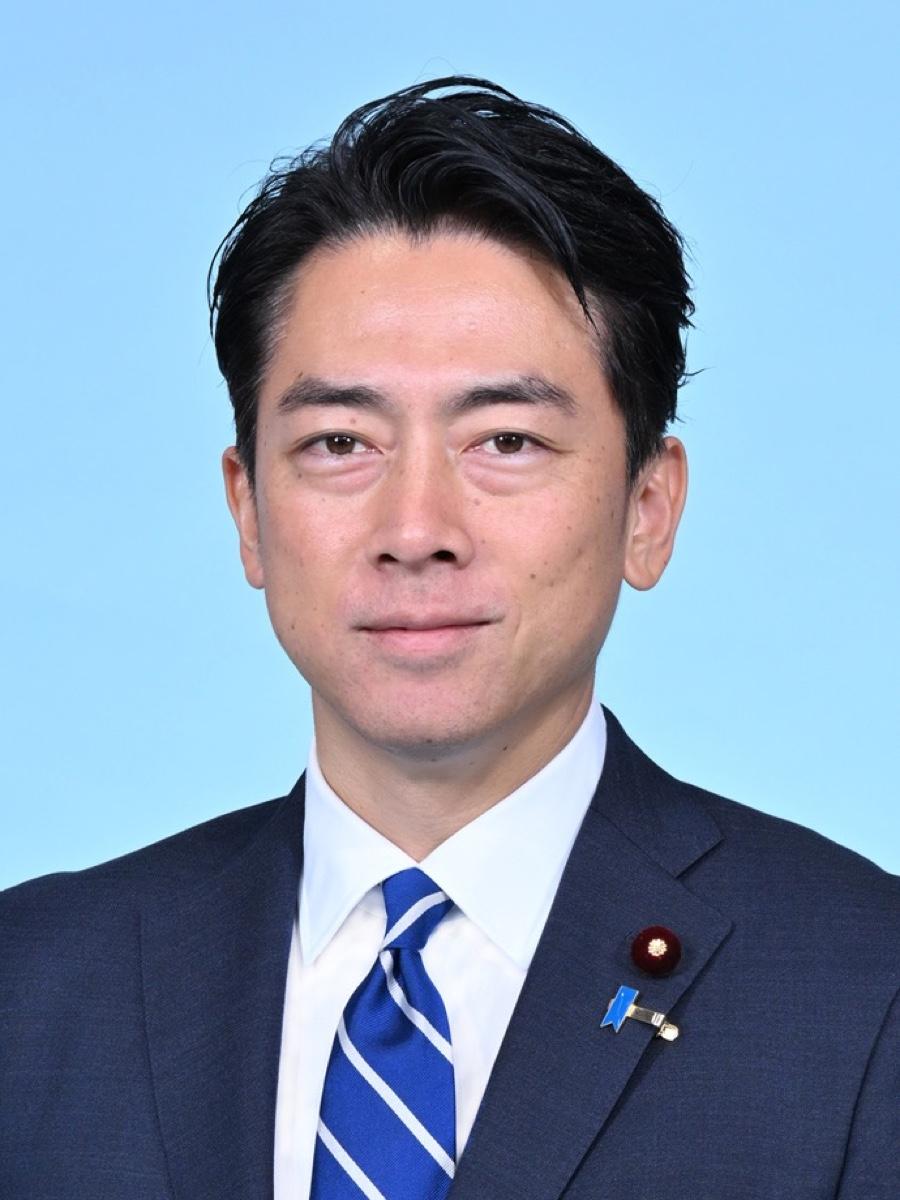
PoliticianPolitical leaning: ConservativeProfile last reviewed: 2026-07-29
Shinjiro Koizumi
Minister of Defense
Taboo-breaking as a governing style: the celebrity reformer who once wanted climate action to be 'sexy' now wants Japan to say the unsayable about nuclear weapons.
Shinjiro Koizumi (小泉進次郎), 45, son of former prime minister Junichiro Koizumi, spent a decade as the Liberal Democratic Party's telegenic reformist heir before losing the 2025 leadership runoff to Sanae Takaichi 185-156 and taking the defense portfolio in her hawkish cabinet instead. As Defense Minister he has become the most visible face of Japan's security turn: rebuffing China's 'new militarism' charge at the Shangri-La Dialogue, standing up a Pacific Defense Planning Office, hosting Pete Hegseth in Tokyo, pushing to loosen arms-export rules, and in July 2026 urging Japan to openly debate nuclear deterrence as the government weighs revising the three non-nuclear principles. It is a striking second act for the minister who made global headlines in 2019 for the 'sexy' climate remark and in 2020 for becoming the first sitting Japanese cabinet member to take paternity leave.
Basis for the leaning assessment
Red-coded signals weighed: he runs the Defense Ministry in Takaichi's cabinet, is pushing to bring forward revision of the three security documents and to ease defense-equipment export rules, created a Pacific Defense Planning Office explicitly aimed at China, has urged open debate on nuclear deterrence when the government is weighing revision of the three non-nuclear principles, visits Yasukuni Shrine on 15 August most years, accepts constitutional amendment in principle, campaigned in 2025 on illegal foreign employment and public-safety anxiety, and built his 2024 platform on labor-market deregulation and easier dismissal rules. Blue-coded signals pulling him back from the +70s: he is one of the few LDP heavyweights to campaign for a selective separate-surname system, was the first sitting cabinet minister to take paternity leave, has told NHK surveys he backs same-sex marriage legalization, ran the Environment Ministry as a climate-ambition advocate under fire over coal, and regards nuclear power as unsustainable in the long term. His labor-market position is genuinely cross-cutting: it is neoliberal deregulation in the Koizumi-father mold, red on the economic axis but opposed by conservative LDP colleagues as well as by unions.
Current Stances
Stances are editorial interpretations, always shown with the statements and actions they rest on.
War & Peaceobserved 2026-05-31 – 2026-07-19
Japan should break its own debate taboos, including on nuclear deterrence, to deter China.
As Defense Minister, Koizumi argues Japan's security environment has deteriorated so far that subjects long treated as unspeakable, above all the role of nuclear weapons, must be discussed openly, while insisting the buildup is defensive and that Japan's door to dialogue with Beijing stays open.
Supporting statements & actions (2)
2026-05-31Speech
There's a country that has a huge arsenal of nuclear weapons and strategic bombers. Japan has neither of such weapons, and yet Japan is labelled 'new militarism'?
Speaking at the Shangri-La Dialogue in Singapore, rejecting Beijing's characterization of Japan's defense buildup and saying of dialogue with China, 'We keep the door open.'
2026-07-19Interview
While this is a difficult issue for Japan to discuss, one topic we cannot avoid is nuclear weapons.
Recorded for an online news program ahead of a trip to Europe and reported on 19 July 2026; a rare instance of a sitting cabinet member broaching nuclear weapons, made as the government weighs revising its security documents and possibly the three non-nuclear principles, and citing France and Finland as countries strengthening nuclear deterrence.
Goals
What Shinjiro Koizumi said they would do, in their own words and dated. Where the record settles one, the source for that is shown too. The same goals across everyone are in the promise tracker.
Short-term
Put nuclear deterrence into Japan's security debate
ActiveGet the role of nuclear weapons discussed openly as the government rewrites its three key defense and security documents, which analysts read as opening the door to reviewing the three non-nuclear principles.
Declared: 2026-07-19Source ↗
Rebuild the Defense Ministry for alliance diplomacy
ActiveEase defense-equipment export rules, stand up the new Pacific Defense Planning Office to review Self-Defense Forces posture in the Pacific, and create a new international-cooperation bureau to handle equipment transfers and cross-servicing agreements with partner militaries.
Declared: 2026-07-15
Long-term
Become prime minister
UnclearConsistency Tracker
Does each new statement or decision square with the record? Verdicts are not accusations: both sides of the record are presented so readers can judge for themselves. The same readings across everyone on the site are in the consistency index.
Earlier statement / action
2019-09-22Speech
It's got to be fun, it's got to be cool. It's got to be sexy too.
Newly appointed Environment Minister Koizumi, then 38, speaking at a New York news conference on the eve of the UN climate summit about how to mobilize young people on climate change.
One of the most-quoted lines ever uttered by a Japanese minister abroad; it circulated worldwide within hours, was mocked at home as empty sloganeering, and the Japanese government later formally stated that his use of 'sexy' was difficult to translate accurately into Japanese.
Later statement / action
2026-07-19Interview
While this is a difficult issue for Japan to discuss, one topic we cannot avoid is nuclear weapons.
Recorded for an online news program ahead of a trip to Europe and reported on 19 July 2026; a rare instance of a sitting cabinet member broaching nuclear weapons, made as the government weighs revising its security documents and possibly the three non-nuclear principles, and citing France and Finland as countries strengthening nuclear deterrence.
Most-Cited Sources from Voterscommunity reading list
Articles readers attached to their poll votes as evidence. Only pages cited independently by two or more voters are listed.
- 1www.aljazeera.com/news/2020/1/16/japans-environment-minister-to-take-paternity-leave ↗
Cited by 8 voters
Liberal 2Conservative 6 - 2www.sbs.com.au/news/article/make-climate-fight-sexy-and-fun-says-japans-new-environment-minister/4awn1rfiq ↗
Cited by 8 voters
Liberal 3Conservative 5 - 3en.jinf.jp/weekly/archives/11360 ↗
Cited by 4 voters
Liberal 1Conservative 3
Most-Discussed Moments
The statements and actions that set social media on fire — top 2, in chronological order. Every entry links to its source.
- 2019-09-22Speech
It's got to be fun, it's got to be cool. It's got to be sexy too.
Newly appointed Environment Minister Koizumi, then 38, speaking at a New York news conference on the eve of the UN climate summit about how to mobilize young people on climate change.
One of the most-quoted lines ever uttered by a Japanese minister abroad; it circulated worldwide within hours, was mocked at home as empty sloganeering, and the Japanese government later formally stated that his use of 'sexy' was difficult to translate accurately into Japanese.
- 2020-01-15Speech
Unless we change the atmosphere, government employees presumably won't start taking paternity leave.
Announcing he would take two weeks of paternity leave spread over three months, becoming the first sitting Japanese cabinet minister to do so; he also said he hoped for a day when lawmakers' paternity leave is 'no longer news'.
The announcement was front-page news across Japan and covered worldwide, because only about 6% of Japanese men took paternity leave at the time; commentators split between hailing a cultural first and accusing him of a publicity stunt.
Timeline of Statements & Actions7 records, newest first
2026-07-19Interview
While this is a difficult issue for Japan to discuss, one topic we cannot avoid is nuclear weapons.
Recorded for an online news program ahead of a trip to Europe and reported on 19 July 2026; a rare instance of a sitting cabinet member broaching nuclear weapons, made as the government weighs revising its security documents and possibly the three non-nuclear principles, and citing France and Finland as countries strengthening nuclear deterrence.
2026-05-31Speech
There's a country that has a huge arsenal of nuclear weapons and strategic bombers. Japan has neither of such weapons, and yet Japan is labelled 'new militarism'?
Speaking at the Shangri-La Dialogue in Singapore, rejecting Beijing's characterization of Japan's defense buildup and saying of dialogue with China, 'We keep the door open.'
2025-07-15Speech
Some say higher prices would have been good for farmers, but is that really so? If consumers stop eating rice because it's expensive, is that really in the interest of rice farmers?
As Agriculture Minister during Japan's rice price crisis, defending his release of government stockpiled rice to bring supermarket prices down ahead of the July 2025 upper house election.
More from Japan
Share this record
Every claim above carries its source, so the page holds up wherever it lands.