PoliticianPolitical leaning: Center-rightProfile last reviewed: 2026-07-29
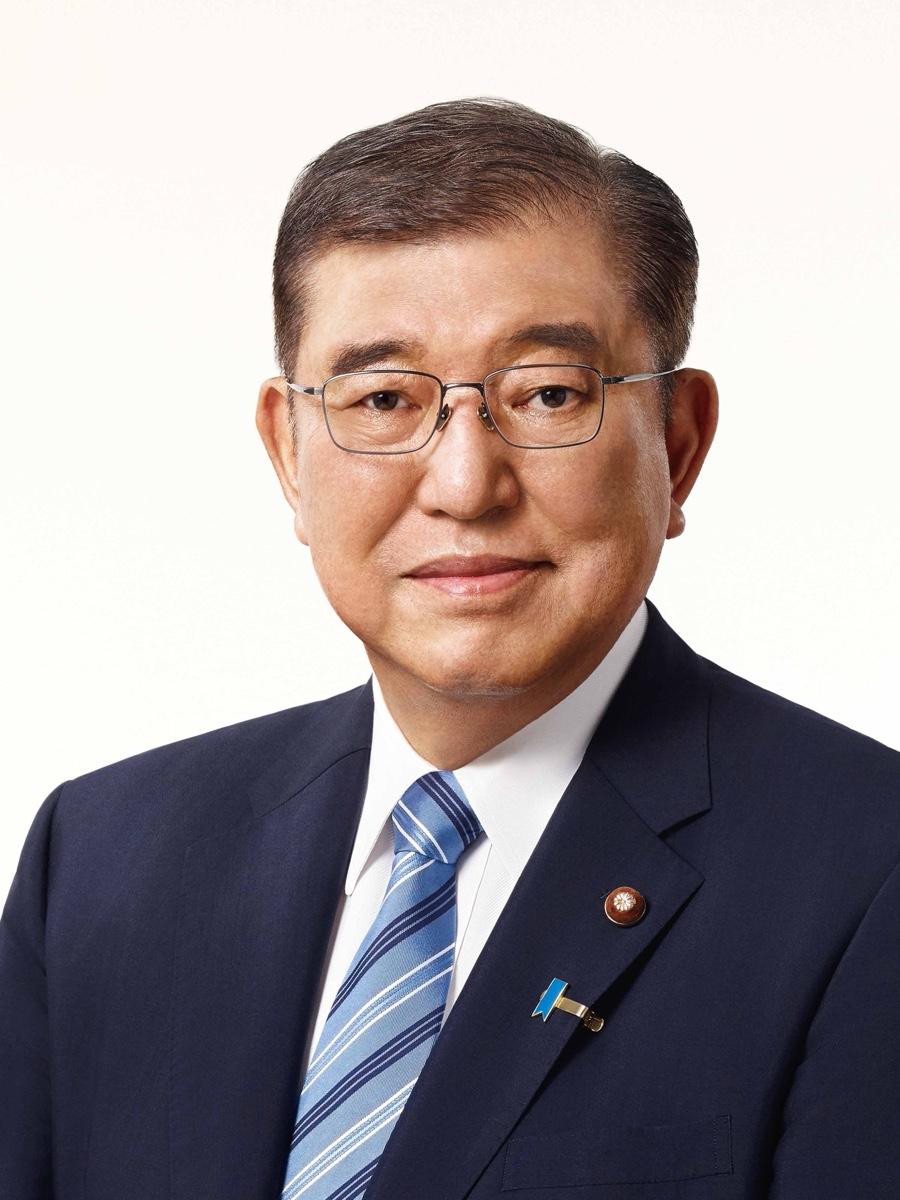
Shigeru Ishiba
Member, House of Representatives; Prime Minister 2024-2025
A lifetime hawk's last argument: build the deterrent quietly, delete Article 9's second clause eventually, and never, ever say out loud what Japan would do over Taiwan.
Shigeru Ishiba (石破茂) spent nearly three decades as the Liberal Democratic Party's in-house dissident before finally winning it on his fifth attempt, then governed for 385 days as a minority prime minister -- closing a 15 percent tariff deal with Trump, losing control of both houses of the Diet, and quitting in September 2025 rather than split his party. Eleven days before handing power to Sanae Takaichi he published a roughly 6,000-word personal reckoning with why Japan's own political system could not stop the country going to war in the 1930s; the incoming leadership immediately filed it as his private opinion. Since leaving office he has become the strangest object in Japanese politics: the country's most credentialled defense hawk acting as the loudest brake on its hawkish turn, telling Takaichi that saying out loud what Japan would do over Taiwan buys no deterrence at all.
Basis for the leaning assessment
Weighed red: he is the LDP's most thoroughgoing constitutional revisionist (he wants Article 9's second paragraph deleted outright, going further than Abe's add-a-clause approach), a career defense hawk who ran the Defense Agency and Defense Ministry, author of 'National Defense' and 'Don't Talk of Peace Without Knowing the Military', and the man who published the 'Asian NATO' essay that explicitly asked Asia to consider US nuclear sharing. Weighed blue: he is on record for a selective separate-surname system, treats same-sex marriage as a constitutional human-rights question rather than a culture-war one, spent his career attacking the Abe faction from inside the party, prioritised dialogue with Beijing as prime minister, published a war-history document the party right tried to stop, and since late 2025 has been the most prominent conservative warning that the Takaichi government's Taiwan rhetoric and its opening on the three non-nuclear principles are reckless. He is genuinely cross-cutting rather than centrist: hard right on military capability, hard against the right on historical memory, family law and diplomatic discipline. +20 reflects that the capability agenda is the older and more consistent half of the record.
Current Stances
Stances are editorial interpretations, always shown with the statements and actions they rest on.
Build the deterrent hard and quietly; announcing what you would do in a Taiwan war buys nothing and costs plenty.
Ishiba wants Asian collective defense, a revised Status of Forces Agreement and an honest debate about the US nuclear umbrella, but he treats declaratory hawkishness as a strategic mistake: as prime minister he refused to revisit the three non-nuclear principles, and out of office he has repeatedly said Japan's Taiwan posture must stay deliberately unstated. His critics inside the LDP read the same record as a man who wrote the loudest hawkish manifesto of his generation and then policed everyone else's.
Supporting statements & actions (3)
2024-09-25Publication
The absence of a collective self-defense system like NATO in Asia means that wars are likely to break out because there is no obligation for mutual defense. The Asian version of NATO must also specifically consider America's sharing of nuclear weapons or the introduction of nuclear weapons into the region.
Essay published by the Hudson Institute two days before Ishiba won the LDP leadership on his fifth attempt; it also proposed revising the Japan-US Status of Forces Agreement to station Japanese forces in Guam.
🔥'Asian NATO' became instant global shorthand for the incoming Ishiba government's foreign policy -- and was publicly cooled by Washington, which said it was 'too early to talk' about collective security in Asia, and rejected outright by India and Beijing.
What Shigeru Ishiba said they would do, in their own words and dated. Where the record settles one, the source for that is shown too. The same goals across everyone are in the promise tracker.
Long-term
Rebuild Japan-China stability without slowing the defense build-up
Pull Tokyo back from declaratory hawkishness on Taiwan and restore the working relationship with Beijing he cultivated as prime minister, while continuing to argue for Asian collective defense and a stronger Japanese military.
Legislate an option for married couples to keep different surnames -- a position he has held for years, softened to a maiden-name 'compromise' in office, and has not abandoned.
Does each new statement or decision square with the record? Verdicts are not accusations: both sides of the record are presented so readers can judge for themselves. The same readings across everyone on the site are in the consistency index.
The absence of a collective self-defense system like NATO in Asia means that wars are likely to break out because there is no obligation for mutual defense. The Asian version of NATO must also specifically consider America's sharing of nuclear weapons or the introduction of nuclear weapons into the region.
Essay published by the Hudson Institute two days before Ishiba won the LDP leadership on his fifth attempt; it also proposed revising the Japan-US Status of Forces Agreement to station Japanese forces in Guam.
🔥'Asian NATO' became instant global shorthand for the incoming Ishiba government's foreign policy -- and was publicly cooled by Washington, which said it was 'too early to talk' about collective security in Asia, and rejected outright by India and Beijing.
What we would do in a Taiwan contingency is not something to be said out in the open. This is not about having said what you wanted to say. Nor is it about it being fine so long as approval ratings go up. Successive administrations have proceeded with the utmost care -- Japan-China relations are that delicate.
Most-Cited Sources from Voterscommunity reading list
Articles readers attached to their poll votes as evidence. Only pages cited independently by two or more voters are listed.
The statements and actions that set social media on fire — top 4, in chronological order. Every entry links to its source.
1
2024-09-25Publication
The absence of a collective self-defense system like NATO in Asia means that wars are likely to break out because there is no obligation for mutual defense. The Asian version of NATO must also specifically consider America's sharing of nuclear weapons or the introduction of nuclear weapons into the region.
Essay published by the Hudson Institute two days before Ishiba won the LDP leadership on his fifth attempt; it also proposed revising the Japan-US Status of Forces Agreement to station Japanese forces in Guam.
🔥'Asian NATO' became instant global shorthand for the incoming Ishiba government's foreign policy -- and was publicly cooled by Washington, which said it was 'too early to talk' about collective security in Asia, and rejected outright by India and Beijing.
Having reached a milestone in the U.S. tariff negotiations, I decided now is the time to make way for a successor. Who would seriously negotiate with a government whose leader says he is stepping down?
Resignation press conference, seven weeks after the LDP-Komeito coalition lost its upper-house majority in the July 2025 election; he said staying on would cause 'a critical division within the party, and that is absolutely not my intention.'
The pressure campaign produced its own backlash: a '#Ishiba, don't quit' hashtag spread widely on Japanese social media in the weeks before he gave in, an unusual show of public sympathy for a prime minister being pushed out by his own party.
Timeline of Statements & Actions7 records, newest first
2026-07-29Interview
Gave a long interview to Toyo Keizai published under the headline 'Can the country be defended by short-video politics that cannot even get people to listen to five minutes of talk?', questioning the precariousness of the Takaichi government's security policy and the state of Japanese national security debate.
One of a steady stream of media appearances since he left office in October 2025; written as an event description because the interview body is paywalled and only the headline, standfirst and publication date could be verified. Translated from the Japanese original.
What we would do in a Taiwan contingency is not something to be said out in the open. This is not about having said what you wanted to say. Nor is it about it being fine so long as approval ratings go up. Successive administrations have proceeded with the utmost care -- Japan-China relations are that delicate.
Ishiba responding to Prime Minister Takaichi's Diet testimony that Chinese military action against Taiwan could constitute a 'survival-threatening situation' for Japan, during the sharpest Japan-China rupture in years. Translated from the Japanese original.
🔥Chinese state media amplified the rebuke heavily, running repeat pieces on a Japanese ex-prime minister opposing his successor's Taiwan remarks -- which is precisely the outcome his LDP critics said proved him wrong.
We are maintaining it as a policy position. I have no intention of revising it.
Ishiba answering an opposition question in a House of Representatives plenary session on whether he would revisit Japan's three non-nuclear principles; Nikkei reported he also indicated Japan has no need to possess nuclear weapons. Translated from the Japanese original.
What we would do in a Taiwan contingency is not something to be said out in the open. This is not about having said what you wanted to say. Nor is it about it being fine so long as approval ratings go up. Successive administrations have proceeded with the utmost care -- Japan-China relations are that delicate.
Ishiba responding to Prime Minister Takaichi's Diet testimony that Chinese military action against Taiwan could constitute a 'survival-threatening situation' for Japan, during the sharpest Japan-China rupture in years. Translated from the Japanese original.
🔥Chinese state media amplified the rebuke heavily, running repeat pieces on a Japanese ex-prime minister opposing his successor's Taiwan remarks -- which is precisely the outcome his LDP critics said proved him wrong.
Constitutions decide whether a country can stop itself -- so fix Article 9, and revere what the postwar order got right.
Ishiba is the LDP's most thoroughgoing revisionist on Article 9, arguing for years that the second paragraph renouncing war potential should be deleted so the Self-Defense Forces have a lawful constitutional footing, rather than Abe's approach of bolting an SDF clause onto the existing text. His 80th-anniversary document approached the same question from the other end, locating Japan's road to war in the prewar Imperial Constitution's absence of civilian control and arguing that tolerance, deliberation and a robust democracy are the real safeguards -- which is why party conservatives disowned a revisionist's document as dangerously self-critical.
Supporting statements & actions (2)
2025-10-10Publication
The unanswered question is: why our domestic political system could not serve as a brake to stop such attempts.
Ishiba's personal message on the 80th anniversary of the war's end, issued eleven days before he left office after LDP conservatives blocked a cabinet-endorsed statement in August; it blamed the prewar constitution's lack of civilian control, squabbling parties, a supine Imperial Diet, media that found war reporting sold well, and poor intelligence analysis. Quotation as rendered in Asia Times' English translation of the Japanese document.
🔥Party conservatives and incoming leader Sanae Takaichi moved immediately to contain it, insisting it carried no government weight and represented only Ishiba's personal opinion.
Gave a long interview to Toyo Keizai published under the headline 'Can the country be defended by short-video politics that cannot even get people to listen to five minutes of talk?', questioning the precariousness of the Takaichi government's security policy and the state of Japanese national security debate.
One of a steady stream of media appearances since he left office in October 2025; written as an event description because the interview body is paywalled and only the headline, standfirst and publication date could be verified. Translated from the Japanese original.
Let married couples keep separate surnames -- a position he holds, and a fight he did not win.
Ishiba is one of the few senior LDP figures on record for a selective separate-surname system and treats same-sex marriage as a constitutional human-rights question rather than a left-right one, but within four months of taking office he retreated to a 'compromise' of expanding legal recognition of maiden names under pressure from the party's conservative wing. Supporters call that the only arithmetic available to a minority prime minister; critics call it the clearest case of Ishiba trading his own convictions for party peace.
Supporting statements & actions (1)
2025-01-28Action
As prime minister, retreated from his long-standing support for a selective dual-surname system for married couples, floating instead a 'compromise' of legally expanding the use of maiden names, after strong opposition from conservatives inside his own LDP.
Ishiba had been one of the few senior LDP figures on record for letting spouses keep separate surnames; written as an event description because the article text could not be opened to verify exact wording.
Undeclared. He ruled himself out of the September 2025 leadership race that replaced him, but has kept up an unusually heavy media schedule since leaving office and has not closed the door on a return; Japanese commentary openly speculates about it.
Declared: 2026-07-29
Ishiba responding to Prime Minister Takaichi's Diet testimony that Chinese military action against Taiwan could constitute a 'survival-threatening situation' for Japan, during the sharpest Japan-China rupture in years. Translated from the Japanese original.
🔥Chinese state media amplified the rebuke heavily, running repeat pieces on a Japanese ex-prime minister opposing his successor's Taiwan remarks -- which is precisely the outcome his LDP critics said proved him wrong.
In September 2024 Ishiba published an essay arguing that Asia's lack of a NATO-style mutual defense obligation makes war likely and that the region must openly consider American nuclear sharing. Fourteen months later he attacked his successor for publicly describing how Japan might respond to a Chinese move on Taiwan, saying it was not something to be said out in the open. His own framing is that capability and candour are separate instruments -- you build the alliance architecture and the hardware, and you never hand an adversary a tripwire or a domestic audience a slogan. Critics inside the LDP answer that the man who wrote the most quotably hawkish document of his generation cannot credibly appoint himself censor of other people's hawkish speech, and point to Chinese state media gleefully republishing his rebuke as evidence of the cost.
Having reached a milestone in the U.S. tariff negotiations, I decided now is the time to make way for a successor. Who would seriously negotiate with a government whose leader says he is stepping down?
Resignation press conference, seven weeks after the LDP-Komeito coalition lost its upper-house majority in the July 2025 election; he said staying on would cause 'a critical division within the party, and that is absolutely not my intention.'
🔥The pressure campaign produced its own backlash: a '#Ishiba, don't quit' hashtag spread widely on Japanese social media in the weeks before he gave in, an unusual show of public sympathy for a prime minister being pushed out by his own party.
The unanswered question is: why our domestic political system could not serve as a brake to stop such attempts.
Ishiba's personal message on the 80th anniversary of the war's end, issued eleven days before he left office after LDP conservatives blocked a cabinet-endorsed statement in August; it blamed the prewar constitution's lack of civilian control, squabbling parties, a supine Imperial Diet, media that found war reporting sold well, and poor intelligence analysis. Quotation as rendered in Asia Times' English translation of the Japanese document.
🔥Party conservatives and incoming leader Sanae Takaichi moved immediately to contain it, insisting it carried no government weight and represented only Ishiba's personal opinion.
Ishiba resigned in September 2025 saying that clinging on would cause a critical division in the LDP and that this was absolutely not his intention. Five weeks later, eleven days before actually leaving office, he published a personal document arguing that Japan's own prewar institutions -- constitution, parties, Diet, press -- failed to stop the country going to war, over the objections of party conservatives who had already blocked a cabinet-endorsed version in August. He presents these as consistent: he gave up the job to protect the party, and used the freedom of a departing leader to place on the record something the party would never approve collectively. Opponents see the opposite -- a caretaker who invoked unity to justify his exit and then detonated the most divisive possible document on his way out, forcing the incoming Takaichi leadership to disown a sitting prime minister's words.
The absence of a collective self-defense system like NATO in Asia means that wars are likely to break out because there is no obligation for mutual defense. The Asian version of NATO must also specifically consider America's sharing of nuclear weapons or the introduction of nuclear weapons into the region.
Essay published by the Hudson Institute two days before Ishiba won the LDP leadership on his fifth attempt; it also proposed revising the Japan-US Status of Forces Agreement to station Japanese forces in Guam.
🔥'Asian NATO' became instant global shorthand for the incoming Ishiba government's foreign policy -- and was publicly cooled by Washington, which said it was 'too early to talk' about collective security in Asia, and rejected outright by India and Beijing.
We are maintaining it as a policy position. I have no intention of revising it.
Ishiba answering an opposition question in a House of Representatives plenary session on whether he would revisit Japan's three non-nuclear principles; Nikkei reported he also indicated Japan has no need to possess nuclear weapons. Translated from the Japanese original.
Ten weeks separated the essay in which Ishiba urged Asia to consider the introduction or sharing of American nuclear weapons and the Diet answer in which he said Japan's three non-nuclear principles were maintained as policy and he had no intention of revising them. His defence has been that decision-sharing inside an alliance is a different thing from stationing warheads on Japanese soil, and that possessing nuclear weapons would never serve Japan because it would mean leaving the NPT. Sceptics call it the standard candidate-to-office reversal: the taboo was worth breaking for a leadership-race audience and not worth defending once he had to answer to the Diet, atomic-bomb survivors and Japan's neighbours. The distinction matters again in 2026, with the Takaichi government reviewing the 'no introduction' principle -- and Ishiba now on the cautious side of the argument he helped start.
The unanswered question is: why our domestic political system could not serve as a brake to stop such attempts.
Ishiba's personal message on the 80th anniversary of the war's end, issued eleven days before he left office after LDP conservatives blocked a cabinet-endorsed statement in August; it blamed the prewar constitution's lack of civilian control, squabbling parties, a supine Imperial Diet, media that found war reporting sold well, and poor intelligence analysis. Quotation as rendered in Asia Times' English translation of the Japanese document.
🔥Party conservatives and incoming leader Sanae Takaichi moved immediately to contain it, insisting it carried no government weight and represented only Ishiba's personal opinion.
What we would do in a Taiwan contingency is not something to be said out in the open. This is not about having said what you wanted to say. Nor is it about it being fine so long as approval ratings go up. Successive administrations have proceeded with the utmost care -- Japan-China relations are that delicate.
Ishiba responding to Prime Minister Takaichi's Diet testimony that Chinese military action against Taiwan could constitute a 'survival-threatening situation' for Japan, during the sharpest Japan-China rupture in years. Translated from the Japanese original.
🔥Chinese state media amplified the rebuke heavily, running repeat pieces on a Japanese ex-prime minister opposing his successor's Taiwan remarks -- which is precisely the outcome his LDP critics said proved him wrong.
The unanswered question is: why our domestic political system could not serve as a brake to stop such attempts.
Ishiba's personal message on the 80th anniversary of the war's end, issued eleven days before he left office after LDP conservatives blocked a cabinet-endorsed statement in August; it blamed the prewar constitution's lack of civilian control, squabbling parties, a supine Imperial Diet, media that found war reporting sold well, and poor intelligence analysis. Quotation as rendered in Asia Times' English translation of the Japanese document.
🔥Party conservatives and incoming leader Sanae Takaichi moved immediately to contain it, insisting it carried no government weight and represented only Ishiba's personal opinion.
Having reached a milestone in the U.S. tariff negotiations, I decided now is the time to make way for a successor. Who would seriously negotiate with a government whose leader says he is stepping down?
Resignation press conference, seven weeks after the LDP-Komeito coalition lost its upper-house majority in the July 2025 election; he said staying on would cause 'a critical division within the party, and that is absolutely not my intention.'
🔥The pressure campaign produced its own backlash: a '#Ishiba, don't quit' hashtag spread widely on Japanese social media in the weeks before he gave in, an unusual show of public sympathy for a prime minister being pushed out by his own party.
As prime minister, retreated from his long-standing support for a selective dual-surname system for married couples, floating instead a 'compromise' of legally expanding the use of maiden names, after strong opposition from conservatives inside his own LDP.
Ishiba had been one of the few senior LDP figures on record for letting spouses keep separate surnames; written as an event description because the article text could not be opened to verify exact wording.
We are maintaining it as a policy position. I have no intention of revising it.
Ishiba answering an opposition question in a House of Representatives plenary session on whether he would revisit Japan's three non-nuclear principles; Nikkei reported he also indicated Japan has no need to possess nuclear weapons. Translated from the Japanese original.
The absence of a collective self-defense system like NATO in Asia means that wars are likely to break out because there is no obligation for mutual defense. The Asian version of NATO must also specifically consider America's sharing of nuclear weapons or the introduction of nuclear weapons into the region.
Essay published by the Hudson Institute two days before Ishiba won the LDP leadership on his fifth attempt; it also proposed revising the Japan-US Status of Forces Agreement to station Japanese forces in Guam.
🔥'Asian NATO' became instant global shorthand for the incoming Ishiba government's foreign policy -- and was publicly cooled by Washington, which said it was 'too early to talk' about collective security in Asia, and rejected outright by India and Beijing.