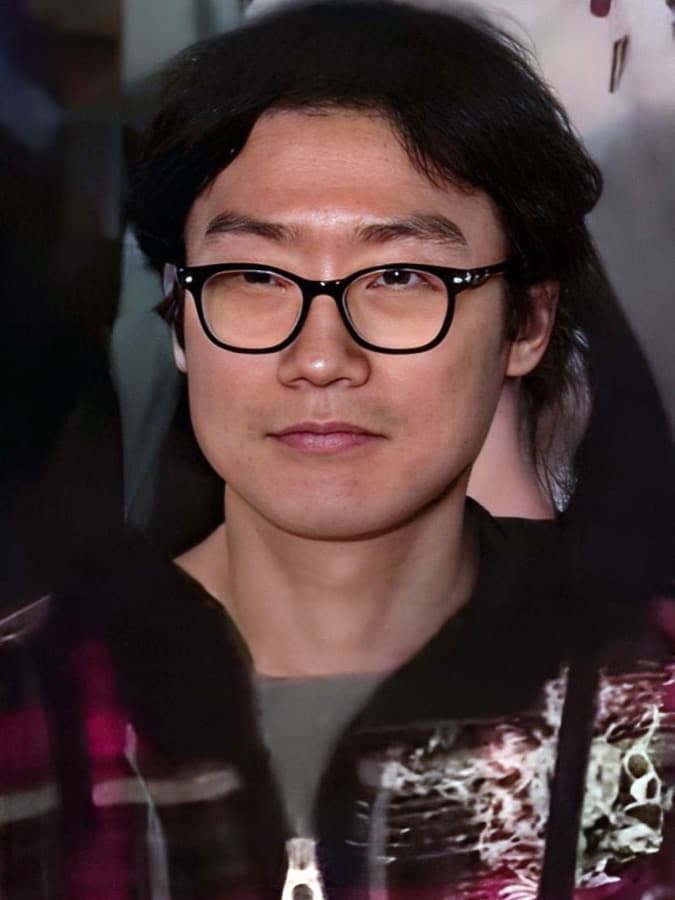
Public figurePolitical leaning: Center-leftProfile last reviewed: 2026-07-29
Hwang Dong-hyuk
Writer-director; creator of Squid Game
Late capitalism as a deadly children's game: inequality, greed, and election-era polarization are the real VIP lounge — Netflix just financed the allegory.
Filmmaker whose Netflix series Squid Game became a global phenomenon by allegory-ing debt, competition, and wealth gaps. In interviews he has said 21st-century capitalism hit its limits, that ~90% of people feel the economic order is unfair, and later seasons reflect greed, social distrust, and extremist political division — including AI-fueled propaganda. His own post-success wealth sits in awkward tension with the critique.
Basis for the leaning assessment
His work is a sustained critique of inequality and debt, which reads left on the US axis; as a filmmaker rather than a political figure he is rated near the middle.
Current Stances
Stances are editorial interpretations, always shown with the statements and actions they rest on.
Wealth & Inequalityobserved 2021-10 – 2025-06
Modern capitalism traps losers with no recovery
Repeatedly describes extreme competition, debt, and a sense that ~90% live in an unfair order — Squid Game as allegory asking who built the cliff-edge system.
Supporting statements & actions (4)
2021-10-13Interview
Well, these days we are, in fact, living in a deeply unfair and economically challenging world. Especially after the pandemic. I mean, there is more inequality, more severe competition and more people are being pushed to the edge of their livelihoods. Currently, I would say that more than 90 percent of people across the world will be able to somehow connect and empathize with the plight of the characters.
Interview explaining global resonance of Season 1 and thoughts on continuing the story.
2021-10-26Interview
It's not profound! It's very simple! I do believe that the overall global economic order is unequal and that around 90% of the people believe that it's unfair. … So I did try to convey a message about modern capitalism.
Discussed capitalism message and denied a Netflix success bonus; noted vaccine inequality across countries.
'I'm not that rich' clash with Squid Game's money satire fueled thinkpieces.
Goals
What Hwang Dong-hyuk said they would do, in their own words and dated. Where the record settles one, the source for that is shown too. The same goals across everyone are in the promise tracker.
Short-term
Long-term
Force audiences to question the competition system
ActiveUse entertainment allegory so viewers ask who designed cliff-edge capitalism — not only in Korea.
Declared: 2021-11-18Source ↗
Explore aging and generational conflict
UnclearStated interest in a future work on aging populations and intergenerational conflict (2021 forum).
Consistency Tracker
Does each new statement or decision square with the record? Verdicts are not accusations: both sides of the record are presented so readers can judge for themselves. The same readings across everyone on the site are in the consistency index.
Earlier statement / action
2021-11-18Speech
In the 21st century, I thought that maybe we were seeing the limits of capitalism. Everybody is now in this huge competition, and once you fail at the competition, then you cannot ever recover from it. You're pushed more and more to the bottom of society.
Seoul Digital Forum / SBS D Forum remarks after Squid Game's global breakout.
'Limits of capitalism' became the go-to headline for left cultural readings of the show.
Later statement / action
2021-10-26Interview
It's not profound! It's very simple! I do believe that the overall global economic order is unequal and that around 90% of the people believe that it's unfair. … So I did try to convey a message about modern capitalism.
Discussed capitalism message and denied a Netflix success bonus; noted vaccine inequality across countries.
'I'm not that rich' clash with Squid Game's money satire fueled thinkpieces.
Most-Cited Sources from Voterscommunity reading list
Articles readers attached to their poll votes as evidence. Only pages cited independently by two or more voters are listed.
- 1www.latimes.com/entertainment-arts/tv/story/2025-06-27/squid-game-season-3-hwang-dong-hyuk-lee-jung-jae ↗
Cited by 9 voters
Liberal 4Conservative 5 - 2www.hollywoodreporter.com/tv/tv-news/squid-game-creator-season-2-meaning-1235030617 ↗
Cited by 6 voters
Liberal 5Conservative 1 - 3
Most-Discussed Moments
The statements and actions that set social media on fire — top 3, in chronological order. Every entry links to its source.
- 2021-10-26Interview
It's not profound! It's very simple! I do believe that the overall global economic order is unequal and that around 90% of the people believe that it's unfair. … So I did try to convey a message about modern capitalism.
Discussed capitalism message and denied a Netflix success bonus; noted vaccine inequality across countries.
'I'm not that rich' clash with Squid Game's money satire fueled thinkpieces.
- 2021-11-18Speech
In the 21st century, I thought that maybe we were seeing the limits of capitalism. Everybody is now in this huge competition, and once you fail at the competition, then you cannot ever recover from it. You're pushed more and more to the bottom of society.
Seoul Digital Forum / SBS D Forum remarks after Squid Game's global breakout.
'Limits of capitalism' became the go-to headline for left cultural readings of the show.
Timeline of Statements & Actions7 records, newest first
2025-06-27Interview
However these days, I do not think that is the case. The conflict and divide that comes from taking different sides in an election is becoming more and more extremist, where people no longer think that other people can be different from you. It's more of, 'I'm right, and all of you are wrong.' … On top of that, there is so much populism and propaganda, as well as AI-generated fake news and an algorithm-based consumption of news.
Finale/spinoff interview connecting Squid Game themes to election conflict, populism, and AI misinformation.
Tied the show's ending discourse to real-world democratic polarization and AI fake news.
2025-06-27Interview
You can say this is a story of those who have become losers of the game, and also those of us who are shaken to our core because of the chaotic political landscape. I wanted to focus in Season 3 on how in this world, where incessant greed is always fueled, it's like a jungle — the strong eating the weak, where people climb higher by stepping on other people's heads.
Season 3 press; linked financial losers' stories to chaotic politics and greed-as-jungle metaphor.
2024-12-08Interview
I think fundamentally what continues to drive this system is human selfishness and greed. These days I'm becoming more pessimistic about human nature. I almost think that, for homo sapiens, it's greed that allows them to create a society that they feel most comfortable in.
More from South Korea
- Cho KukFormer Rebuilding Korea Party leader; progressive prosecutor-reform figure (post-pardon)
- Han Dong-hoonFormer People Power Party leader; National Assembly member (independent track after PPP exit)
- Hong Joon-pyoFormer Daegu mayor; retired conservative heavyweight
- Kim Keon HeeFormer First Lady of South Korea (wife of Yoon Suk Yeol)
Share this record
Every claim above carries its source, so the page holds up wherever it lands.