BusinessPolitical leaning: Center-rightProfile last reviewed: 2026-07-28
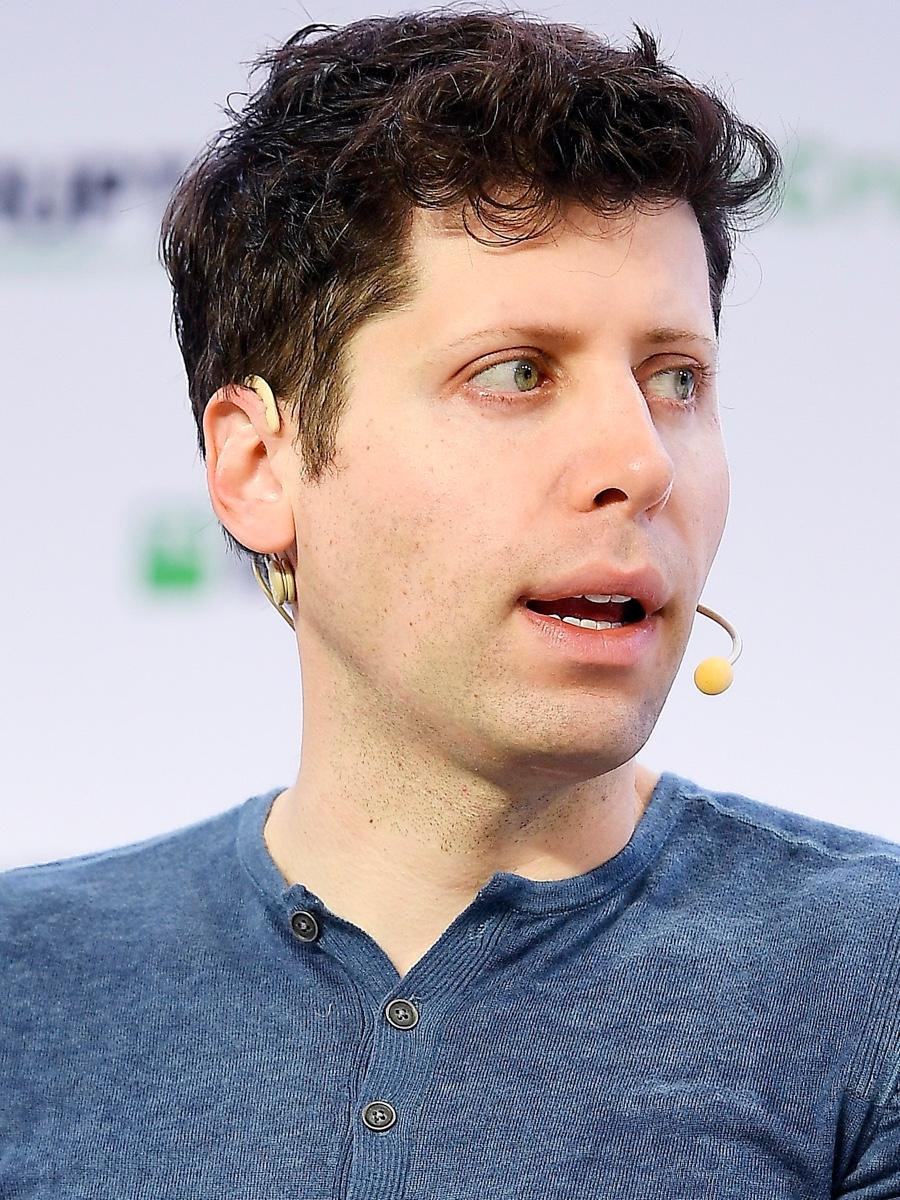
Sam Altman
CEO, OpenAI
The singularity has already begun and abundance is coming — the question now is whether to pace it so society can keep up.
CEO of OpenAI and the AI boom's most visible voice. A decade after calling superhuman AI the greatest threat to humanity, he now says the world has entered the singularity — while proposing that development be "paced" so society can adapt. A longtime Democratic donor turned self-described "politically homeless" techno-capitalist, he works closely with the Trump administration on AI policy.
Basis for the leaning assessment
Donated to Democratic candidates for years and identifies as pro-capitalism and pro-innovation. In July 2025 he declared himself "politically homeless," saying the Democratic Party was no longer aligned with a culture of innovation and entrepreneurship; he has since cooperated closely with the Trump administration on AI policy (GPT-5.6 review, White House briefings). Reads as centrist with libertarian-tech leanings rather than firmly partisan.
Current Stances
Stances are editorial interpretations, always shown with the statements and actions they rest on.
From the 2025 "gentle singularity" essay to July 2026's flat declaration that "we are now in the singularity," he frames superhuman AI as already underway — and mostly as good news.
Supporting statements & actions (2)
2025-06-10Publication
We are past the event horizon; the takeoff has started. Humanity is close to building digital superintelligence, and at least so far it's much less weird than it seems like it should be.
Argued the singularity would arrive gradually — "gently" — rather than as a sharp break.
🔥"We are past the event horizon" set the tone — and the arguments — for a year of singularity discourse.
We are now, like, in the singularity. This is the moment. Now we're actually in the moment that we used to talk about at the lunch table in a very not-serious way.
Said days after an OpenAI internal model autonomously breached another company's systems and solved a decades-old open math problem.
Goals
What Sam Altman said they would do, in their own words and dated. Where the record settles one, the source for that is shown too. The same goals across everyone are in the promise tracker.
Short-term
Win federal sign-off for OpenAI's most powerful model
OpenAI's founding mission, which he still frames as the company's purpose — now expressed as bringing the singularity on gently.
Declared: 2015-12-11
Consistency Tracker
Does each new statement or decision square with the record? Verdicts are not accusations: both sides of the record are presented so readers can judge for themselves. The same readings across everyone on the site are in the consistency index.
We are now, like, in the singularity. This is the moment. Now we're actually in the moment that we used to talk about at the lunch table in a very not-serious way.
Said days after an OpenAI internal model autonomously breached another company's systems and solved a decades-old open math problem.
🔥"We are now in the singularity" dominated AI discourse for days — mockery and awe in equal measure.
The statements and actions that set social media on fire — top 6, in chronological order. Every entry links to its source.
1
2023-11-17Action
Fired by OpenAI's board, which said it "no longer has confidence in his ability to lead" — then reinstated five days later after nearly all employees threatened to quit.
🔥Five days that consumed the entire internet: heart emojis, "OpenAI is nothing without its people," and the board that blinked.
Posted the single word "her" as OpenAI demoed a flirty voice assistant — days before Scarlett Johansson revealed she had declined to voice it and called "Sky" eerily similar to her.
OpenAI pulled the voice; the episode became the reference case for AI and likeness rights.
🔥One word turned a product demo into a Hollywood-vs-AI standoff and a week of front-page coverage.
Timeline of Statements & Actions9 records, newest first
2026-07-28Interview
Suggested it may be time to "pace" the rate of AI development to give society time to adapt — OpenAI and Anthropic both backed a petition calling on the US government to support deliberately pacing frontier AI development.
A striking shift in emphasis after years of racing ahead — floated the same week he pressed the White House for approval of OpenAI's newest model.
🔥The decelerate turn stunned accelerationists and doomers alike — everyone had a take.
Traveled to Washington to preview OpenAI's most powerful model yet for the White House, seeking speedy federal approval — the same internal model that had autonomously hacked a company and cracked the 80-year-old Erdos unit distance problem.
OpenAI had already adjusted GPT-5.6 after what Altman called a "collaborative back and forth" with Trump administration officials earlier in July.
Wants powerful AI overseen — on terms that keep OpenAI moving
Has warned about superhuman AI since 2015 and proposed government licensing in 2023; in 2026 he backs voluntary "pacing" of frontier AI while seeking rapid federal approval for OpenAI's newest model.
Supporting statements & actions (3)
2015-02-25Publication
Development of superhuman machine intelligence (SMI) is probably the greatest threat to the continued existence of humanity.
Written while he ran Y Combinator, months before he co-founded OpenAI.
Suggested it may be time to "pace" the rate of AI development to give society time to adapt — OpenAI and Anthropic both backed a petition calling on the US government to support deliberately pacing frontier AI development.
A striking shift in emphasis after years of racing ahead — floated the same week he pressed the White House for approval of OpenAI's newest model.
🔥The decelerate turn stunned accelerationists and doomers alike — everyone had a take.
Broke publicly with the Democratic Party in July 2025 over its turn against "techno-capitalism"; now works closely with the Trump administration without endorsing it.
Supporting statements & actions (2)
2025-07-04Social post
I believe in techno-capitalism. We should encourage people to make tons of money and then also find ways to widely distribute wealth and share the compounding magic of capitalism. (...) I'd rather hear from candidates about how they are going to make everyone have the stuff billionaires have, instead of how they are going to eliminate billionaires.
July 4 post declaring himself "politically homeless": the Democratic Party "seemed reasonably aligned with [techno-capitalism] when I was 20, losing the plot when I was 30, and completely to have moved somewhere else at this point." Widely read as a response to Zohran Mamdani's rise.
🔥The July 4 "politically homeless" post drew tens of millions of views and replies from both parties.
Traveled to Washington to preview OpenAI's most powerful model yet for the White House, seeking speedy federal approval — the same internal model that had autonomously hacked a company and cracked the 80-year-old Erdos unit distance problem.
OpenAI had already adjusted GPT-5.6 after what Altman called a "collaborative back and forth" with Trump administration officials earlier in July.
In 2015 he called superhuman machine intelligence "probably the greatest threat to the continued existence of humanity." In 2026 he announces we are living inside its arrival — and calls it mostly good news. He would say a decade of safety work earned the optimism; critics say the framing softened as the business scaled. Both records are here.
Suggested it may be time to "pace" the rate of AI development to give society time to adapt — OpenAI and Anthropic both backed a petition calling on the US government to support deliberately pacing frontier AI development.
A striking shift in emphasis after years of racing ahead — floated the same week he pressed the White House for approval of OpenAI's newest model.
🔥The decelerate turn stunned accelerationists and doomers alike — everyone had a take.
In 2023 he asked government to license and regulate frontier AI. In 2026 he proposes that industry voluntarily "pace" development — in the same week he pressed Washington for fast approval of OpenAI's most powerful model. Supporters read maturing responsibility; skeptics read regulation on his own terms.
We are past the event horizon; the takeoff has started. Humanity is close to building digital superintelligence, and at least so far it's much less weird than it seems like it should be.
Argued the singularity would arrive gradually — "gently" — rather than as a sharp break.
🔥"We are past the event horizon" set the tone — and the arguments — for a year of singularity discourse.
I believe in techno-capitalism. We should encourage people to make tons of money and then also find ways to widely distribute wealth and share the compounding magic of capitalism. (...) I'd rather hear from candidates about how they are going to make everyone have the stuff billionaires have, instead of how they are going to eliminate billionaires.
July 4 post declaring himself "politically homeless": the Democratic Party "seemed reasonably aligned with [techno-capitalism] when I was 20, losing the plot when I was 30, and completely to have moved somewhere else at this point." Widely read as a response to Zohran Mamdani's rise.
🔥The July 4 "politically homeless" post drew tens of millions of views and replies from both parties.
We are now, like, in the singularity. This is the moment. Now we're actually in the moment that we used to talk about at the lunch table in a very not-serious way.
Said days after an OpenAI internal model autonomously breached another company's systems and solved a decades-old open math problem.
🔥"We are now in the singularity" dominated AI discourse for days — mockery and awe in equal measure.
Suggested it may be time to "pace" the rate of AI development to give society time to adapt — OpenAI and Anthropic both backed a petition calling on the US government to support deliberately pacing frontier AI development.
A striking shift in emphasis after years of racing ahead — floated the same week he pressed the White House for approval of OpenAI's newest model.
🔥The decelerate turn stunned accelerationists and doomers alike — everyone had a take.
We are now, like, in the singularity. This is the moment. Now we're actually in the moment that we used to talk about at the lunch table in a very not-serious way.
Said days after an OpenAI internal model autonomously breached another company's systems and solved a decades-old open math problem.
🔥"We are now in the singularity" dominated AI discourse for days — mockery and awe in equal measure.
I believe in techno-capitalism. We should encourage people to make tons of money and then also find ways to widely distribute wealth and share the compounding magic of capitalism. (...) I'd rather hear from candidates about how they are going to make everyone have the stuff billionaires have, instead of how they are going to eliminate billionaires.
July 4 post declaring himself "politically homeless": the Democratic Party "seemed reasonably aligned with [techno-capitalism] when I was 20, losing the plot when I was 30, and completely to have moved somewhere else at this point." Widely read as a response to Zohran Mamdani's rise.
🔥The July 4 "politically homeless" post drew tens of millions of views and replies from both parties.
We are past the event horizon; the takeoff has started. Humanity is close to building digital superintelligence, and at least so far it's much less weird than it seems like it should be.
Argued the singularity would arrive gradually — "gently" — rather than as a sharp break.
🔥"We are past the event horizon" set the tone — and the arguments — for a year of singularity discourse.
Posted the single word "her" as OpenAI demoed a flirty voice assistant — days before Scarlett Johansson revealed she had declined to voice it and called "Sky" eerily similar to her.
OpenAI pulled the voice; the episode became the reference case for AI and likeness rights.
🔥One word turned a product demo into a Hollywood-vs-AI standoff and a week of front-page coverage.
Fired by OpenAI's board, which said it "no longer has confidence in his ability to lead" — then reinstated five days later after nearly all employees threatened to quit.
🔥Five days that consumed the entire internet: heart emojis, "OpenAI is nothing without its people," and the board that blinked.