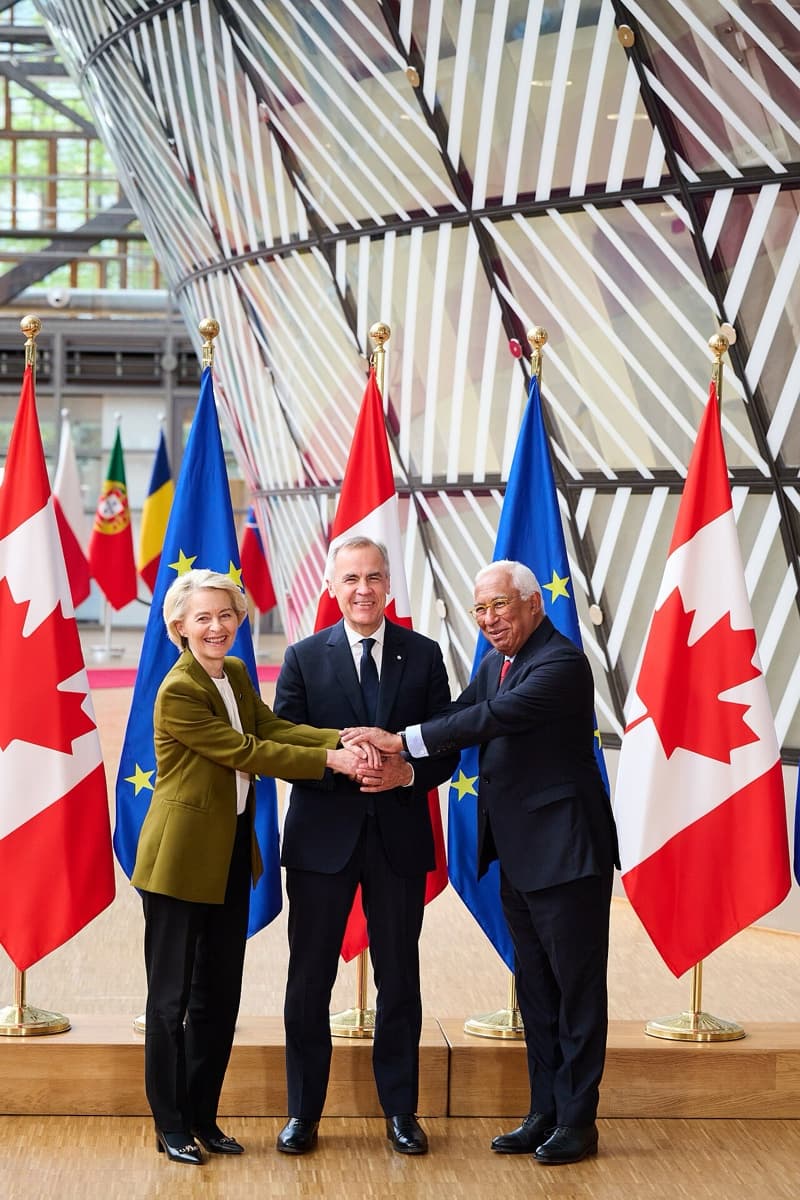
PoliticianPolitical leaning: Center-rightProfile last reviewed: 2026-07-30
Mark Carney
Prime Minister of Canada
Centrist banker-PM navigating a Trump tariff war with energy-superpower rhetoric, a zeroed consumer carbon levy, and a refusal to treat oil exports as bargaining leverage against the United States.
Mark Carney became Liberal leader and prime minister after Justin Trudeau's resignation, positioning Canada as an energy power while scrapping the consumer carbon tax and pursuing a comprehensive US trade deal. In July 2026 he said everything was on the table ahead of threatened 50% tariffs, then days later said he did not see the value in using Canadian energy as a bargaining chip. He has also defended the Clarity Act's clear-majority threshold against 50-plus-one secession votes.
Basis for the leaning assessment
Centrist institutionalist on trade and fiscal signalling; softer than Conservatives on industrial carbon pricing, firmer than sovereigntists on Clarity Act thresholds.
Current Stances
Stances are editorial interpretations, always shown with the statements and actions they rest on.
Trade & Tariffsobserved 2025-03-27 – 2026-07-29
Negotiate hard; avoid energy export cuts as leverage
Carney intensifies talks and keeps retaliation options open against Trump tariffs, but rejects using Canadian oil and energy supply cuts as a bargaining chip, citing trust and reliability.
Supporting statements & actions (5)
2025-03-27Speech
It is clear that the United States is no longer a reliable partner. It is possible that, with comprehensive negotiations, we will be able to restore some trust, but there will be no turning back.
Ottawa remarks after Trump announced 25% auto tariffs; also summarised on Wikipedia's US–Canada trade-war timeline.
Defined Carney's early PM message that deep North American integration was over.
2026-07-23Speech
Everything's on the table
After meeting Canada's premiers in Charlottetown ahead of Trump's threatened 50% tariffs scheduled for Aug. 19; Carney said Canada was intensifying US talks but prepared to respond.
The phrase became a foil when Carney later downplayed energy-export leverage.
Goals
What Mark Carney said they would do, in their own words and dated. Where the record settles one, the source for that is shown too. The same goals across everyone are in the promise tracker.
Medium-term
Secure mutually beneficial US trade agreement
ActiveIntensify negotiations for a comprehensive deal that works for Canadians before or despite threatened 50% tariffs, without previewing every countermeasure.
Declared: 2026-07-23Source ↗
Preserve Canada as a trusted energy supplier
ActiveAvoid cutting oil or energy exports as tariff retaliation so Canada keeps its reputation as a reliable commodity supplier.
Declared: 2026-07-29Source ↗
Reduce over-reliance on the United States
ActivePivot trade relationships and build strategic economic autonomy after declaring the old deep-integration relationship with the US over.
Consistency Tracker
Does each new statement or decision square with the record? Verdicts are not accusations: both sides of the record are presented so readers can judge for themselves. The same readings across everyone on the site are in the consistency index.
Earlier statement / action
2026-07-23Speech
Everything's on the table
After meeting Canada's premiers in Charlottetown ahead of Trump's threatened 50% tariffs scheduled for Aug. 19; Carney said Canada was intensifying US talks but prepared to respond.
The phrase became a foil when Carney later downplayed energy-export leverage.
Later statement / action
2026-07-29Speech
I don't see the value of doing (it). I mean, I can understand conceptually, but I don't see the value.
Red Deer, Alberta press availability after an announcement with Premier Danielle Smith, asked whether Canada would use energy exports as leverage in the US trade war.
Carney's reluctance to weaponise oil contrasted with premiers who said everything should stay on the table.
Most-Cited Sources from Voterscommunity reading list
Articles readers attached to their poll votes as evidence. Only pages cited independently by two or more voters are listed.
- 1apnews.com/article/canada-us-trump-carney-tariffs-0591038f6084d8a4210d57bca94de8d3 ↗
Cited by 11 voters
Liberal 7Conservative 4 - 2www.bnnbloomberg.ca/tariffs/2026/07/29/i-dont-see-the-value-in-it-pm-carney-on-whether-hed-use-canadian-energy-as-a-bargaining-chip-in-us-trade-war ↗
Cited by 11 voters
Liberal 6Conservative 5 - 3
Most-Discussed Moments
The statements and actions that set social media on fire — top 5, in chronological order. Every entry links to its source.
- 2025-03-14Action
Prime Minister Mark Carney's Liberal government took steps to eliminate the consumer carbon tax. At the same time, Carney has said that he would seek to improve and tighten the industrial pricing system.
Factual paraphrase of Carney's early-cabinet move to zero the consumer fuel charge while retaining industrial carbon pricing, reported in CBC coverage of Poilievre's repeal pledge. National Post separately reported Carney ruling out cutting oil exports in the tariff fight.
Marked the Liberal shift from Trudeau-era consumer carbon pricing under electoral pressure.
- 2025-03-27Speech
It is clear that the United States is no longer a reliable partner. It is possible that, with comprehensive negotiations, we will be able to restore some trust, but there will be no turning back.
Ottawa remarks after Trump announced 25% auto tariffs; also summarised on Wikipedia's US–Canada trade-war timeline.
Defined Carney's early PM message that deep North American integration was over.
Timeline of Statements & Actions7 records, newest first
2026-07-29Speech
Being a reliable supplier is important. People trust us. And so, when you're supplier of a key commodity, (a) key service, you've got to think really hard about not supplying.
Same Red Deer availability framing trust and reliability as Canada's most valuable commodity in energy trade.
2026-07-29Speech
I don't see the value of doing (it). I mean, I can understand conceptually, but I don't see the value.
Red Deer, Alberta press availability after an announcement with Premier Danielle Smith, asked whether Canada would use energy exports as leverage in the US trade war.
Carney's reluctance to weaponise oil contrasted with premiers who said everything should stay on the table.
2026-07-23Speech
If these tariffs, or other measures come into force, there's a full range of things that we can do in that regard. We don't need to respond in advance. In fact, I think it would be counterproductive at this stage to respond in advance.
Same premiers meeting; Carney refused to preview specific countermeasures while talks continued.
More from Canada
Share this record
Every claim above carries its source, so the page holds up wherever it lands.