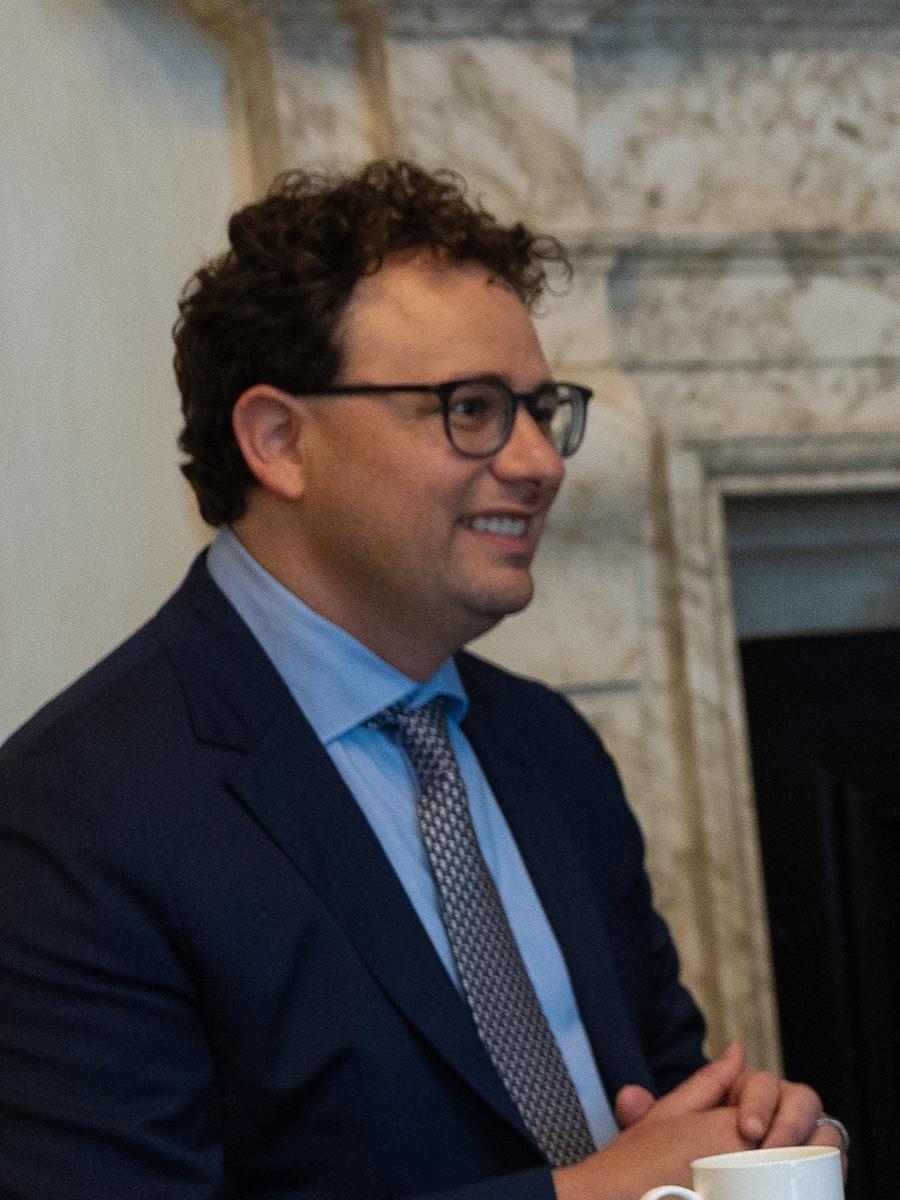
BusinessPolitical leaning: Center-leftProfile last reviewed: 2026-07-30
Dario Amodei
Co-founder & CEO, Anthropic
A 25% chance of catastrophe is worth racing for the other 75: build the safest frontier AI, warn loudly, and pace the industry before it paces us.
Co-founder and CEO of Anthropic and the AI debate's designated honest man: the executive who publishes essays on AI curing disease while warning of a "white-collar bloodbath," puts his p(doom) at 25%, and in July 2026 joined the call to deliberately pace frontier development — while shipping frontier models. His disagreements with Sam Altman and Jensen Huang map the industry's real fault lines.
Basis for the leaning assessment
Avoids party politics; his safety-forward regulatory stances and labor-disruption warnings read center-left, and he has criticized both parties' AI postures. The vote will hinge on how people read "safety."
Current Stances
Stances are editorial interpretations, always shown with the statements and actions they rest on.
AI Regulation & Safetyobserved 2025-06-05 – 2026-07-28
Transparency requirements now — and pace the frontier
Opposed the state-regulation moratorium, proposed federal transparency standards, and backed the 2026 pacing petition: regulation as safety engineering, not obstruction.
Supporting statements & actions (2)
2025-06-05Publication
In a New York Times op-ed, opposed the proposed 10-year federal moratorium on state AI regulation, calling instead for a national transparency standard for frontier developers.
A rare case of a frontier-lab CEO lobbying for more regulation, not less — "too blunt an instrument," he wrote of the moratorium.
2026-07-28Action
Anthropic joined OpenAI in backing a petition calling on the US government to support deliberately pacing frontier AI development, so society can adapt to each new capability level.
The pacing framework Amodei had advocated became, briefly, the industry consensus position.
Goals
What Dario Amodei said they would do, in their own words and dated. Where the record settles one, the source for that is shown too. The same goals across everyone are in the promise tracker.
Short-term
Consistency Tracker
Does each new statement or decision square with the record? Verdicts are not accusations: both sides of the record are presented so readers can judge for themselves. The same readings across everyone on the site are in the consistency index.
Earlier statement / action
2024-10-11Publication
In "Machines of Loving Grace," argued powerful AI could compress a century of scientific progress into 5-10 years — curing most diseases and lifting billions from poverty — "if we get it right."
His definitive optimist case, written explicitly to balance his reputation as a doomer.
Later statement / action
2025-05-28Interview
AI could wipe out half of all entry-level white-collar jobs — and spike unemployment to 10-20% in the next one to five years. Lawmakers and CEOs need to stop "sugarcoating" what is coming.
The "white-collar bloodbath" interview — the most-cited labor warning of the AI boom, made about his own industry's product.
The "white-collar bloodbath" interview dominated LinkedIn and X for weeks and entered the jobs-debate lexicon.
Most-Cited Sources from Voterscommunity reading list
Articles readers attached to their poll votes as evidence. Only pages cited independently by two or more voters are listed.
- 1www.axios.com/2025/09/17/anthropic-dario-amodei-p-doom-25-percent ↗
Cited by 4 voters
Liberal 1Conservative 3 - 2Liberal 3Conservative 1
- 3Liberal 1Conservative 2
Most-Discussed Moments
The statements and actions that set social media on fire — top 2, in chronological order. Every entry links to its source.
- 2025-05-28Interview
AI could wipe out half of all entry-level white-collar jobs — and spike unemployment to 10-20% in the next one to five years. Lawmakers and CEOs need to stop "sugarcoating" what is coming.
The "white-collar bloodbath" interview — the most-cited labor warning of the AI boom, made about his own industry's product.
The "white-collar bloodbath" interview dominated LinkedIn and X for weeks and entered the jobs-debate lexicon.
- 2025-09-17Speech
There's a 25% chance that things go really, really badly — and a 75% chance that things go really, really well.
His answer when asked for his "p(doom)" — the probability that AI catastrophically harms humanity.
The "25%" clip became the most-quoted risk estimate in AI — invoked by both sides of every safety argument.
Timeline of Statements & Actions5 records, newest first
2026-07-28Action
Anthropic joined OpenAI in backing a petition calling on the US government to support deliberately pacing frontier AI development, so society can adapt to each new capability level.
The pacing framework Amodei had advocated became, briefly, the industry consensus position.
2025-09-17Speech
There's a 25% chance that things go really, really badly — and a 75% chance that things go really, really well.
His answer when asked for his "p(doom)" — the probability that AI catastrophically harms humanity.
The "25%" clip became the most-quoted risk estimate in AI — invoked by both sides of every safety argument.
2025-06-05Publication
In a New York Times op-ed, opposed the proposed 10-year federal moratorium on state AI regulation, calling instead for a national transparency standard for frontier developers.
A rare case of a frontier-lab CEO lobbying for more regulation, not less — "too blunt an instrument," he wrote of the moratorium.
More from United States
Share this record
Every claim above carries its source, so the page holds up wherever it lands.